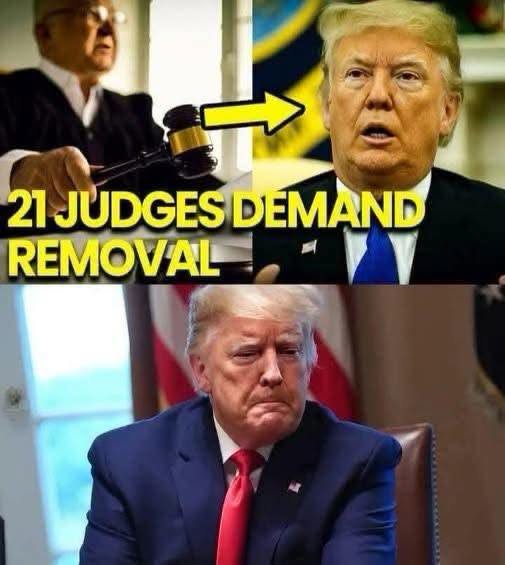
What stunned insiders wasn’t just the letter itself, but who wrote it. Federal judges almost never step into open political conflict, yet these twenty-one chose to risk accusations of bias to warn Congress about what they called dangerous behavior by a former president. Their move didn’t carry the force of law, but it carried something far more volatile: moral authority wrapped in institutional fear.
Behind closed doors, lawmakers argued over whether to treat the letter as a constitutional alarm or an act of overreach. Some saw courage. Others saw a breach of the very neutrality that protects the courts. The episode exposed a raw truth: when trust between branches frays, every gesture looks like a power grab. The story ends not with resolution, but with a question—how many such warnings can a democracy absorb before they stop being warnings at all?