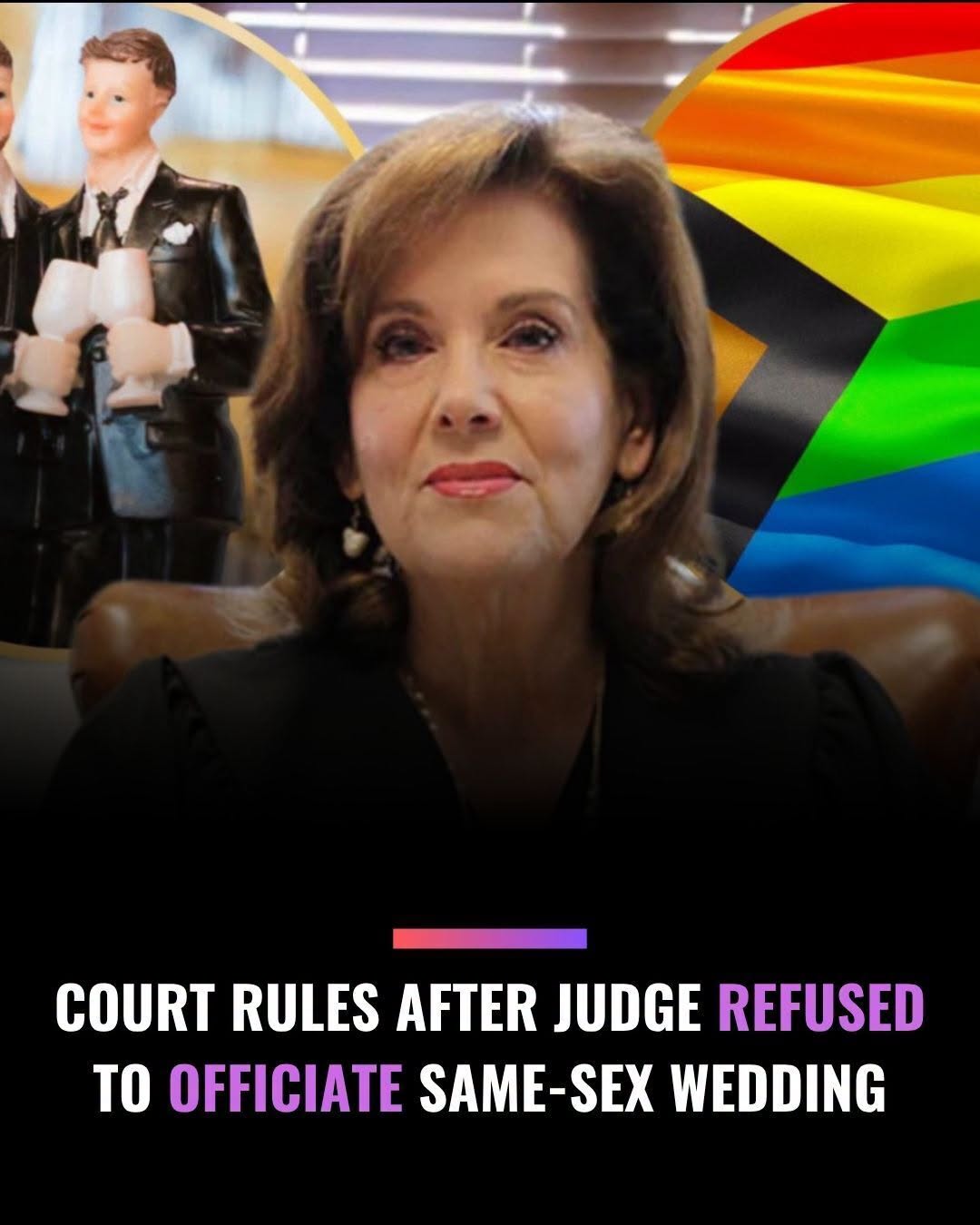
A Texas court has awarded more than $640,000 to a justice of the peace who was disciplined after declining to officiate same-sex weddings because of her religious beliefs.
The ruling marks the end of an eight-year legal battle over religious liberty and the rights of public officials to decline participation in ceremonies that conflict with their faith.
Judge Dianne Hensley will receive $10,000 in damages after a Travis County district court found that her religious freedom rights were violated under Texas law.
The court also ordered the Texas State Commission on Judicial Conduct to pay approximately $630,000 in attorney fees incurred during the litigation.
Hensley was represented by First Liberty Institute and attorney Jonathan F. Mitchell.
According to First Liberty, the dispute began after Hensley chose not to officiate same-sex marriages because doing so conflicted with her Christian beliefs.
Rather than refuse service outright, Hensley established a referral system to ensure couples seeking same-sex marriage ceremonies could quickly obtain another officiant at no additional cost or delay.
Supporters argued that the arrangement allowed Hensley to remain faithful to her religious convictions while ensuring members of the public continued to receive wedding services.
Hiram Sasser, executive general counsel for First Liberty Institute, called the decision an important victory for religious liberty.
“It’s a great victory for people of faith,” Sasser told Fox News Digital.
“It’s important for people of faith to be able to decline to participate in things that they find are incompatible with their religious faith.”
Sasser also praised Hensley’s efforts to accommodate couples despite her religious objections.
“I think one of the great things about how Judge Hensley handled things here is that she not only was exercising her religious faith to say, ‘Hey, look, I can do some marriages, but not others,’ but she was also being a good neighbor,” he said.
According to Sasser, the State Commission on Judicial Conduct first issued Hensley a warning in 2018.
He said the commission informed her that continuing to perform some marriages while declining same-sex ceremonies could result in additional disciplinary action.
“They gave her a warning that if she continued to do any kind of weddings without performing same-sex weddings that they would take it to the next level and continue the punishment against her,” Sasser said.
The warning ultimately led to years of litigation over whether the disciplinary action violated protections for religious liberty under Texas law.
During the legal battle, Texas officials also made changes to the state’s judicial conduct rules.
Sasser said the Texas Supreme Court amended judicial ethics rules to provide greater religious accommodations for judges.
He also noted that the Texas Legislature reformed the membership and structure of the State Commission on Judicial Conduct.
According to Sasser, those changes were intended to reduce the likelihood of similar disputes arising in the future.
Following the ruling, Hensley said she remained focused on serving the public while remaining true to her faith.
“All I wanted to do was serve our community and maintain my faith commitments,” Hensley said in a statement.
“I am thankful the law prevailed after eight long years, and we restored religious liberty to the land.”
The State Commission on Judicial Conduct declined to comment on the court’s ruling.
The case adds to the ongoing national debate over the intersection of religious liberty and anti-discrimination protections.
Supporters of Hensley argue the decision affirms that government officials do not surrender their constitutional and statutory religious rights simply because they hold public office.
Critics of similar exemptions have argued that public officials should provide government services equally to all citizens regardless of personal religious beliefs, Fox News reported.
The Travis County court’s ruling resolves Hensley’s case under Texas law, awarding damages and attorney fees while concluding that the disciplinary action violated her protected religious freedoms.