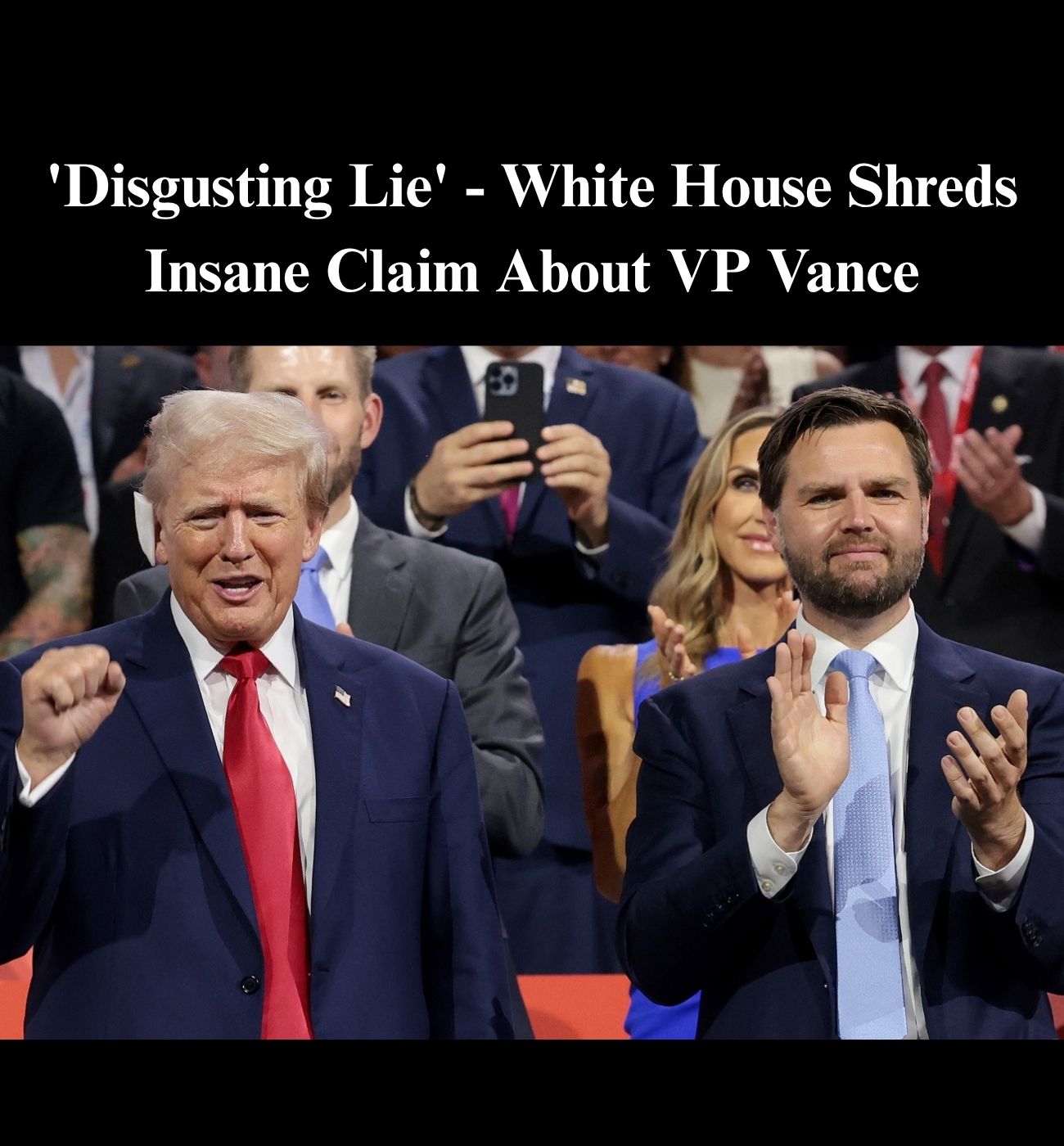
The Trump administration on Saturday vehemently denied a New York Times report claiming that White House Chief of Staff Susie Wiles told Vice President JD Vance to step away from social media, describing the report as “complete fake news.”
“This isn’t true,” said White House Communications Director Steven Cheung on X in response to a post from Jewish Insider editor Josh Kraushaar.
“We denied it to the New York Times and they refused to run our quote. Complete fake news,” Cheung continued.
“This supposed ‘conversation’ never happened,” he said.
The Times reported that Wiles and other senior White House officials had advised the vice president to “take a break from social media,” citing his frequent online fights with critics as “beneath his office.”
The allegation surfaced as part of a broader report examining Vance’s relationship with President Donald Trump and assessing his potential position in what is could be a highly competitive race for the Republican presidential nomination in 2028.
The article also included a response from Cheung, who strongly pushed back on suggestions of tension between the president and vice president and defended the strength of their working relationship.
“Vice President Vance has done a remarkable job of helping implement the president’s America First agenda,” Cheung told the Times.
“Any false media narratives from unknown and unnamed sources fabricating stories clearly do not have any knowledge of the truth,” he added.
Trump adviser Alex Bruisewitz called the Times reporting “Vance Derangement Syndrome.”
“Steven Cheung has stated clearly in the article and reiterated on X that this is completely fake news,” Bruisewitz wrote on X.
“JD Vance is an exceptionally effective communicator and invaluable member of President Trump’s Team. Vance Derangement Syndrome is real, folks,” Bruisewitz added.
Both Vance and Secretary of State Marco Rubio have emerged as early favorites in discussions about the Republican Party’s 2028 presidential nomination.
Recent polling of a hypothetical Republican primary shows the two administration figures running virtually even, underscoring their growing influence within the GOP and the broader America First movement.
In March, Trump asked a group of donors at his Mar-a-Lago estate for their thoughts about Vance and Rubio.
“What do you think of JD Vance and Marco Rubio?” Trump asked, the Wall Street Journal reported at the time.
According to sources who spoke to outlet, donors applauded loudly for Rubio. The applause for Rubio was reportedly louder than the reaction for Vance.
The informal poll came one day after Trump placed Rubio prominently in the administration’s public posture.
Trump noted during a press conference in Florida at the time that Vance had been “less enthusiastic” about going to war with Iran.
Trump also described differences in the way the two men approach politics and diplomacy.
“He gets a little bit tough on occasion; we gotta slow him down on occasion,” Trump said about Vance, per the Journal report.
Trump then contrasted that approach with Rubio’s style.
“Then we have the opposite extreme,” Trump said.
“Marco does it with a velvet glove. But it’s a kill,” Trump said.
Despite the strong reaction from donors, a recent poll suggests Vance may hold greater influence among voters.
A survey conducted by the Daily Mail and JL Partners between March 2 and March 3 asked voters which figures have the most influence in Trump’s inner circle.
Vance led the poll with 19 percent. Rubio received 12 percent.
Stephen Miller and Donald Trump Jr. were tied for third place. The poll surveyed 1,020 registered voters and had a margin of error of 3.1 percent.
The same survey found Rubio’s approval rating declined from 40 percent in February to 36 percent.
Thirty four percent of respondents said they disapproved of Rubio. Seventeen percent said they were neutral.
Fourteen percent said they were unsure.


