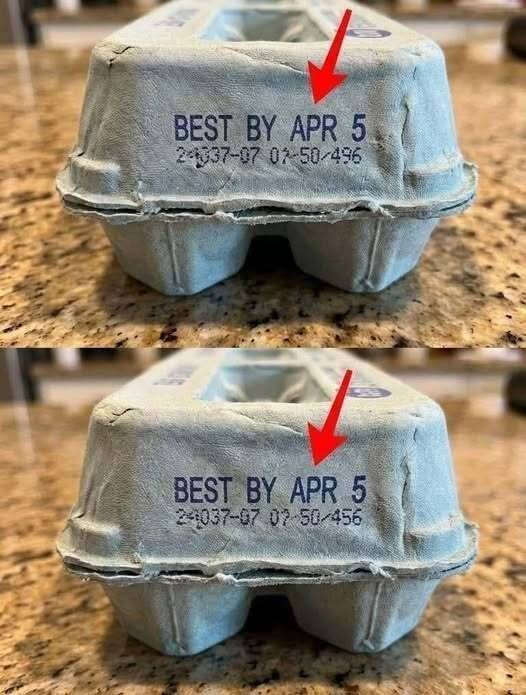
I’ve learned to take this advice seriously now. When I’m at the store, I’ll often compare different cartons of eggs, looking at the Julian date printed on the side. I’ve definitely spent some time at the store, scrutinizing cartons like they’re bottles of vintage wine. And yes, people have looked at me strangely, but that’s fine. I’ve learned from experience, and I’ll never make that mistake again.
Understanding the Plant Code: Where Do Your Eggs Come From?
Next to the Julian date, you’ll often see something called a plant code. This is a crucial piece of information, especially if you’re concerned about food recalls or outbreaks of foodborne illnesses like salmonella. The plant code identifies the specific plant where the eggs were processed. For example, a plant code of “P1021” means that the eggs came from a facility labeled with that identifier.
Why does this matter? Well, in the event of a recall—such as one triggered by salmonella contamination—you’ll need to know whether your eggs were processed at the facility that is the source of the outbreak. This happened to me once when there was a recall, and I had eggs in my fridge. I immediately checked the Julian date and the plant code. Fortunately, they didn’t match up with the recall notice, and I was able to avoid any issues. But that moment of panic, standing in front of the fridge with the carton in my hands and my phone open to government recall websites, was enough to teach me the importance of understanding these codes.
The Myth of Floating Eggs: How to Really Tell If an Egg is Bad
Now, let’s address one of the most common myths about eggs: the floating egg test. You’ve probably heard that if an egg floats in water, it’s bad, and if it sinks, it’s good. While there’s some truth to this, I wouldn’t bet your omelette on it.
The idea behind the floating egg test is based on the size of the air cell inside the egg. As eggs age, air gets trapped inside, and the egg becomes less dense, causing it to float. While this test can sometimes give you an indication of an egg’s age, it’s not foolproof. The best way to check if your eggs are still fresh is to rely on the Julian date, not the floating test.
What I now do is keep track of the packing date and write it down on the top of the carton. I’ll even add a little reminder for myself: “Packed: Day 124, Toss after: Day 154.” This simple system works wonders. It gives me a clear idea of how long I can keep the eggs in my fridge before they’re no longer good. And yes, I even add a sad face emoji on the expiration day. It might be silly, but it helps me remember to use them up before they go bad.