For a long time, I told myself this was grief.
Grief makes people do strange things. It makes them keep shirts that no longer hold warmth, birthday cards from people who are gone, and rooms that feel more like shrines than places to live.
So when I found the storage key after my mother passed away, I thought I knew what I would find.
Old tools.
Fishing rods.
Boxes of Christmas decorations.
Maybe pieces of my father she could not bear to keep in the house but could not bring herself to throw away.
I was wrong.
The key was hidden inside her sewing basket, taped beneath a packet of navy buttons. A small paper tag hung from it with an address written in her careful handwriting.
My fiancé, Henry, was sitting beside me on the bedroom floor when I found it.
“A storage unit?” he asked.
I nodded slowly.
“I didn’t even know she had one.”
The next morning, Henry drove me to the facility, twenty minutes outside town, behind an old tire shop.
The man at the front desk looked over the paperwork and then looked at me with recognition.
“You must be Ava.”
I froze.
“You know my name?”
He introduced himself as Glen and told me my mother had paid for the unit in cash every month for nearly nine years.
“Did she visit often?” I asked.
He hesitated.
“Not often. Mostly she opened the door, stood there, and cried.”
That sounded like her.
Then he added something that made my skin go cold.
“Last Christmas, she asked me for a stronger flashlight. Said she couldn’t see the words clearly enough to cover them.”
“What words?” Henry asked.
Glen only slid the keycard toward me.
“I think you should see for yourself.”
Unit forty-two sat at the end of the second row.
Henry offered to open it for me, but I shook my head.
“I need to do it.”
The metal door groaned as I lifted it.
I expected dust, furniture, maybe old boxes of Dad’s clothes.
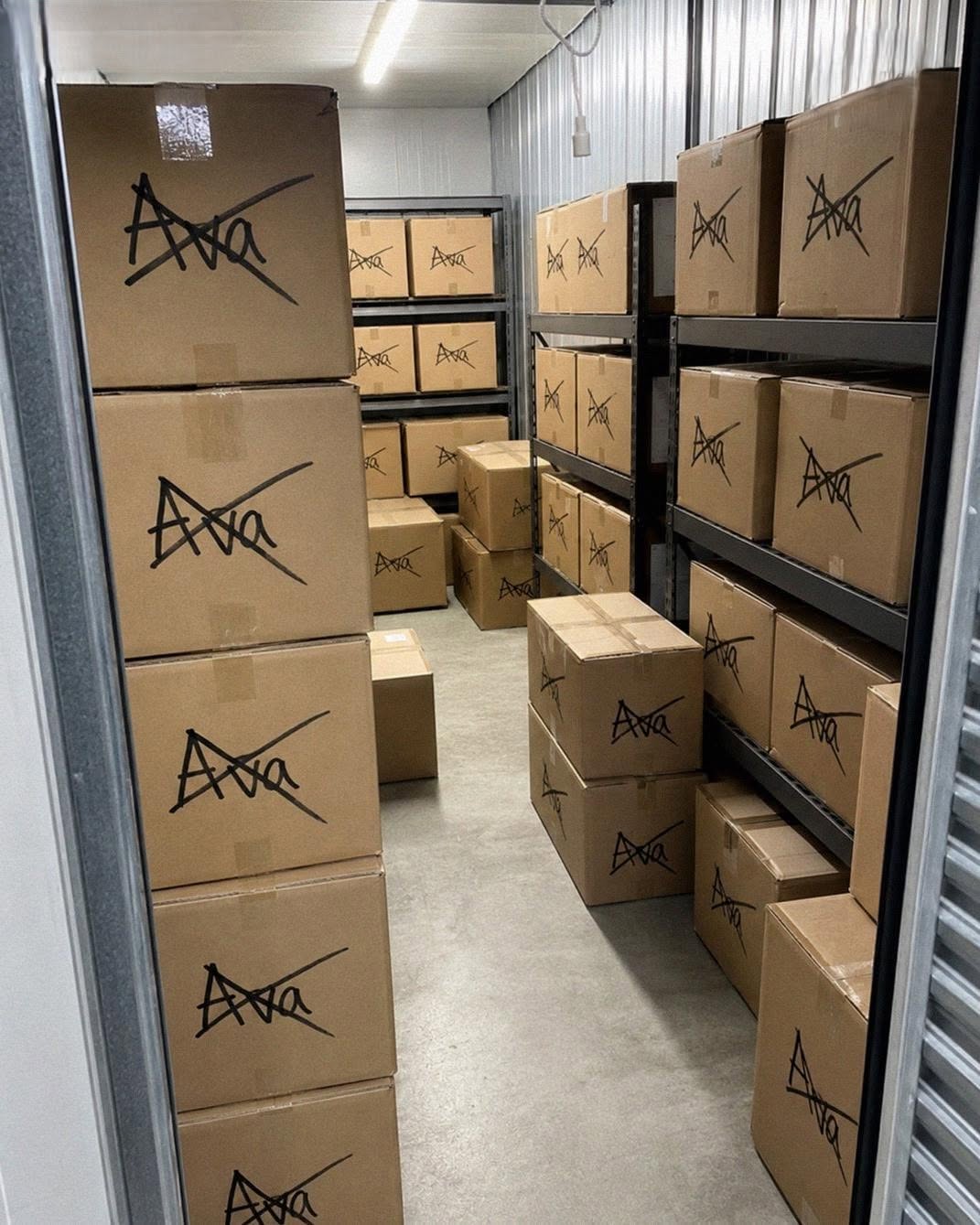
Instead, I found neat shelves packed with cardboard boxes.
Every label was written in my mother’s handwriting.
AVA – House Documents
AVA – Kitchen
AVA – Family Photos
AVA – Peter’s Tools
My name was on every box.
And on every box, my name had been crossed out.
Not lightly.
Not accidentally.
Slashed through with thick black marker so hard the cardboard had torn.
For a moment, I could not move.
Henry whispered, “Ava… what is this?”
I reached for the closest box with shaking hands.
AVA – House Documents.
I tore it open.
Inside was a manila envelope and a letter in my father’s handwriting.
I had not seen his handwriting in nine years.
My legs nearly gave way.
Henry stepped closer.
“What does it say?”
I unfolded the paper.
My Ava,
If you are reading this, then I am gone, and I need you to hear me clearly.
Your mother is going to break in ways she will not admit. I have been her steady place for more than thirty years. She may try to turn this house into proof that I was here.
Let her grieve. Be gentle where you can. But do not disappear to make her comfortable.
This house is yours.
I stopped reading.
The words blurred.
This house is yours.
Henry touched my arm gently.
I forced myself to continue.
Dad had arranged for Mom to live in the house safely for the rest of her life. She would never be pushed out. She would never be abandoned.
But after she died, the house was supposed to belong to me.
Not because he loved her less.
Because he loved us both differently.
Inside the envelope were copies of the will, the deed, and a letter from his attorney.
My mother had told everyone Dad left her everything.
For nine years, I believed her.
But she had known the truth.
And she had hidden it.
I opened another box.
Inside were birthday cards.
All from Dad.
For my thirtieth.
Thirty-first.
Thirty-second.
Thirty-third.
Then I found one marked Thirty-sixth.
The age I was now.
Thirty-six sounds far away, sweetheart, but I hope you get there knowing I tried to make you happy. I love you.
The card slipped from my hand.
“She didn’t just hide documents,” I whispered. “She hid him.”
Henry picked up the card before it touched the floor.
“She wanted his memory all to herself,” he said quietly.
I did not want that sentence to be true.
But it was.
After Dad died, my mother had turned grief into a throne. Every room became about her loss. Every story became about her pain. I was his daughter, but in that house, I had been treated like a visitor at my mother’s tragedy.
Then my phone rang.
It was Aunt Marlene.
“You need to come to the house,” she said sharply. “The estate people are here. The preview starts tomorrow.”
My fingers tightened around Dad’s letter.
“There is no sale.”
She scoffed.
“Your mother put me in charge.”
“No,” I said. “She didn’t own what she was trying to sell.”
When Henry and I reached the house, a white truck sat on the lawn. A man was carrying Dad’s toolbox out of the garage.
“Put that down,” I called.
Aunt Marlene came onto the porch with a clipboard in her hand.
“Ava, lower your voice.”
“No.”
It was the first time I had ever said it to her like that.
“No, I will not lower my voice. This sale is canceled.”
She laughed.
“Your mother said Peter left everything to her.”
“She lied.”
The words landed hard.
Relatives gathered in the doorway.
Cousin Beth.
Uncle Ray.
Two women from church who had watched me at Mom’s funeral as if I had not cried correctly.
Aunt Marlene’s face hardened.
“Do not speak about your mother that way.”
“Then explain why she hid Dad’s will in a storage unit for nine years.”
The porch went silent.
I carried the box inside and set it on the dining room table.
Then I showed them the label.
AVA – House Documents.
My name crossed out beneath black marker.
Beth covered her mouth.
“Oh my God.”
I opened the envelope and spread the papers across the table.
“Dad gave Mom the right to live here for the rest of her life. He protected her. But after she died, the house was mine.”
Aunt Marlene stared at the documents.
“She said he changed his mind.”
“Then she should have kept the page where he said that.”
No one answered.
So I read Dad’s letter aloud.
I read the part where he warned me not to disappear to make Mom comfortable.
I read the part where he said the house was mine.
Then I pulled out another envelope.
This one had been addressed to my mother.
Elaine, my beautiful wife,
Please do not make Ava pay for losing me.
I loved you as my wife. I loved Ava as our daughter. Those loves were never enemies.
Keep my things for comfort, not to keep me from her.
By the time I finished, Beth was crying.
Aunt Marlene sat down slowly.
For the first time, no one defended my mother.
Then I saw Dad’s jacket by the back door.
A yellow price sticker had been placed on the pocket.
Three dollars.
I walked over and peeled it off.
“This is not for sale.”
One of the estate workers looked at Aunt Marlene.
She stared at the papers, then at the crossed-out box.
Finally, she whispered, “Pack it up. The sale is over.”
It took weeks of calls, records, signatures, and relatives suddenly remembering things differently.
But eventually, the truth was confirmed.
The house was mine.
Not because my mother had given it to me.
Because my father had never taken it away.
When I stood in that kitchen with the keys in my hand, Henry smiled softly.
“You did it.”
I shook my head.
“No. Dad did. I just stopped letting Mom be the only person allowed to miss him.”
That morning, I opened every window.
I moved Dad’s jacket from the hook by the door into the closet, where a jacket belonged.
I washed his old mug and filled it with coffee.
Then I opened the box labeled AVA – Books.
Inside were Dad’s novels, the ones he used to read with a pencil in his hand because he liked arguing with the margins.
My mother had crossed my name out hard.
But underneath the black marker, I could still see it.
Ava.
She had tried to erase me from my father’s story.
But my name was still there.
And this time, I did not let anyone cross it out.