Michelle Obama Shares Insight Into Malia’s Independent Approach to Hollywood Career During Conversation With Steven Spielberg
A Candid Conversation on Family, Fame, and Life in the Public Eye
Michelle Obama recently opened up about her daughter Malia Obama during a public conversation that blended humor, personal reflection, and observations about raising children under constant public attention. The discussion unfolded during an episode of IMO, the podcast co-hosted by Michelle Obama and her brother Craig Robinson, where filmmaker Steven Spielberg joined them for an extended exchange.
The conversation naturally moved between lighthearted storytelling and deeper reflections on family life, especially as it relates to children of well-known public figures building identities of their own. Throughout the discussion, themes of independence, privacy, and professional growth in the entertainment industry remained central.
Michelle Obama’s remarks highlighted a specific aspect of her daughter Malia Obama’s approach to her developing career, emphasizing that she prefers to keep her professional life separate from her parents’ influence, despite their global recognition and longstanding public roles.
Steven Spielberg’s Visit to a Presidential Film Set
A key moment in the discussion centered on Steven Spielberg sharing a recent experience involving former President Barack Obama. Spielberg described inviting him to visit the set of an upcoming sci-fi project, marking what he noted as the first time the former president had ever visited a film production set.
The anecdote quickly became a source of humor during the conversation, as it illustrated the casual yet surreal intersections between political history and modern filmmaking environments. Spielberg described the visit as memorable for the cast and crew, many of whom experienced a sense of awe during the encounter.
Michelle Obama responded playfully to the story, reflecting on her husband’s interest in films and his relationship with Spielberg’s work over time. The exchange captured a relaxed and familiar dynamic between the participants, blending personal commentary with industry anecdotes.
The discussion also revealed how public figures from different fields can intersect in creative spaces, where political leadership, entertainment, and personal relationships meet in unexpected ways.
Lighthearted Exchange Between Michelle Obama and Steven Spielberg
As the conversation continued, Michelle Obama and Steven Spielberg engaged in a series of humorous remarks that highlighted the informal tone of the discussion. Spielberg described the former president’s visit in a way that emphasized both excitement and disbelief among the cast members.
“My husband is a bully to you when it comes to your movies. I always reprimand him…because you haven’t let him see [your latest film] and he’s very mad about that,” Michelle joked.
“But he got to come on set for this one,” Spielberg replied.
“Yeah, he said if he wasn’t among the first to see it, he was going to watch it only on an iPhone.”
“Which he knows would irritate you,” replied Michelle, who, since leaving the White House, founded the film and TV production company, Higher Ground Productions, along with her husband.
These exchanges reflected a playful familiarity between the participants, while also underscoring the unique intersections between political life and entertainment careers. The tone remained conversational, with humor used to illustrate personal dynamics and shared history.
Cast Reaction to a High-Profile Set Visit
Steven Spielberg went on to describe the atmosphere on set when the former president arrived. He noted that the presence of such a globally recognized figure created a strong reaction among cast members, many of whom were experiencing the moment in real time.
“It was great. It was, of course, for my cast, it was a bit of a religious experience because in walks this iconic president who comes onto our set,” Spielberg said.
He explained that while he had personal familiarity with the former president, many members of the production team had only known him through his public legacy. This contrast contributed to a moment of quiet awe during the visit.
“To me, he’s a good friend, to all of us, we know each other so well. But on set, the kids didn’t know Barack except from what he’s done for the world and who he represents.”
Spielberg also noted the unexpected silence that fell across the set when the visit took place, describing the reaction of an otherwise outgoing cast. The moment stood out as an unusual pause in the typically energetic environment of film production.
“They were just absolutely – and I have a very extroverted cast – you could hear a pin drop when he walked in. They didn’t know what to say,” he said. “I didn’t tell all of them, I told some of them, but not all of them.”
Michelle Obama on Malia Obama’s Independent Career Path
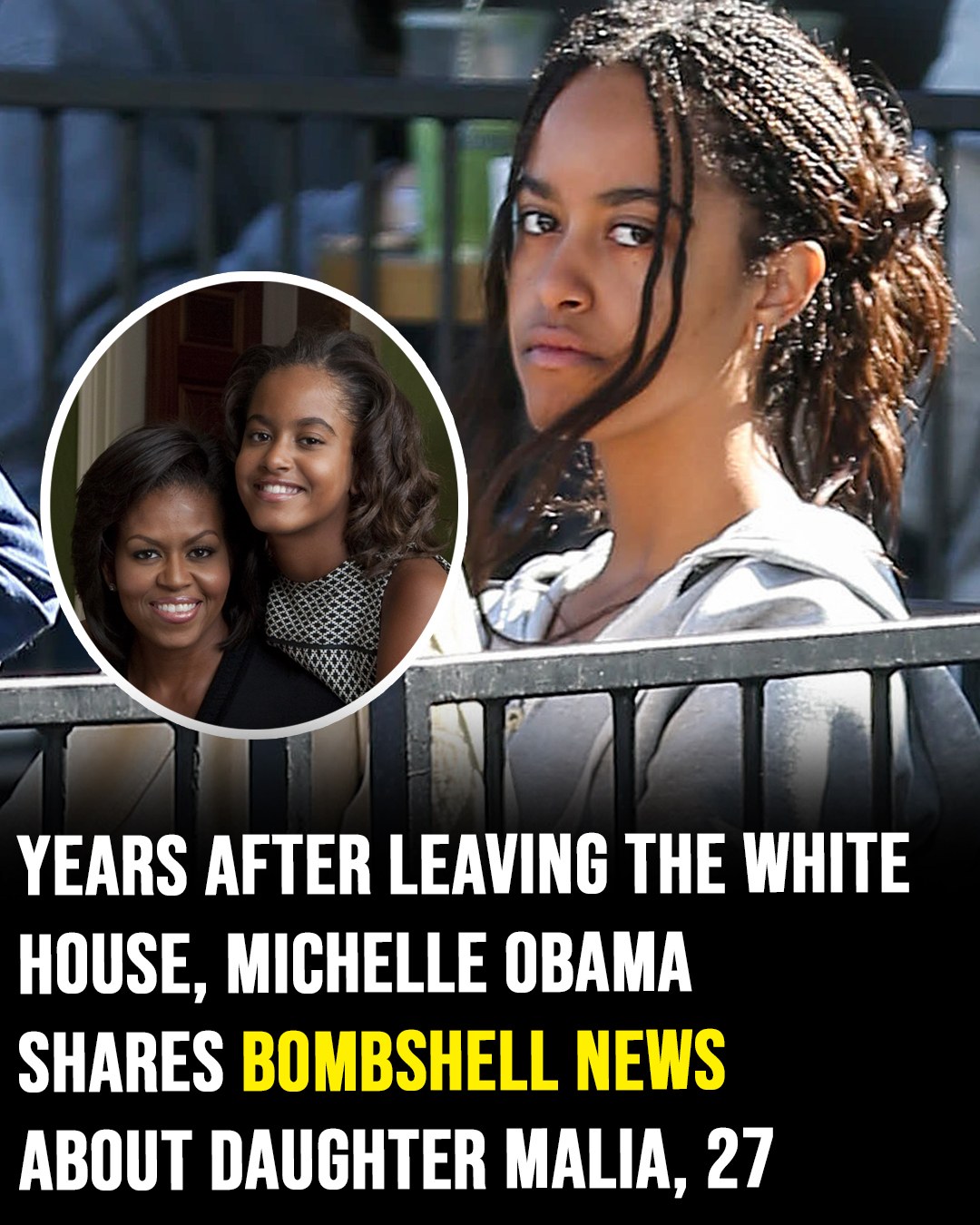
The conversation naturally shifted toward Malia Obama, who has been building a career in the entertainment industry. Now 27, she has already contributed to creative projects, including writing work and directing her own short film, demonstrating early steps in establishing a professional identity.
Michelle Obama reflected on her daughter’s approach to independence, emphasizing that Malia prefers to develop her career without relying on her family’s public profile. This perspective highlighted a broader theme of self-determination within families who live in the public eye.
Malia Obama has also chosen to use the professional name Malia Ann, distancing her work identity from the widely recognized Obama surname. This decision reflects her intention to be evaluated on her own merit within the competitive landscape of Hollywood.
Spielberg humorously acknowledged this point during the discussion, referencing the possibility of overlapping creative spaces within the film industry.
“Even though your daughter is a filmmaker, Malia. So, I feel bad I scooped Malia,” he quipped.
The remark added a light tone to the broader discussion of generational creativity and independent career development within well-known families.
Michelle Obama responded by reinforcing her daughter’s preference for privacy and autonomy in her professional life, emphasizing that Malia actively avoids involving her parents in her work environment.
“She doesn’t care. She will never invite us to anything that she does. You know, she doesn’t want us around her stuff.”
Building a Career in Entertainment on Her Own Terms
Malia Obama’s career path reflects a growing trend among young creatives who seek to establish their identities independently, even when they come from highly visible families. Her work in entertainment includes contributions to television writing and original film projects, signaling an early but deliberate entry into the industry.
By choosing to operate under a modified professional name, she has positioned herself in a way that emphasizes individual capability rather than inherited recognition. This approach aligns with a broader desire among emerging filmmakers to build credibility through personal work and experience.
The entertainment industry often presents unique challenges for individuals connected to prominent public figures, where expectations and assumptions can shape perceptions before work is even released. In this context, Malia Obama’s preference for independence highlights an effort to separate personal identity from public legacy.
Her approach also reflects a broader generational shift in how young professionals engage with fame, privacy, and creative ownership. Rather than embracing visibility through family association, she appears focused on establishing a grounded and self-directed career path.
Family, Fame, and Personal Boundaries in Public Life
The conversation between Michelle Obama and Steven Spielberg ultimately highlighted the balance between public life and personal boundaries within well-known families. While humor played a central role in the discussion, underlying themes of respect, independence, and identity remained consistent throughout.
The exchange illustrated how children of public figures often navigate unique challenges as they transition into their own professional lives. In Malia Obama’s case, her decision to maintain distance from parental involvement in her career underscores a commitment to autonomy.
Michelle Obama’s reflections offered a rare glimpse into this dynamic, portraying it not as a conflict but as a natural part of her daughter’s development into adulthood and professional life.
The broader conversation also underscored how individuals in creative industries often define success not only through opportunity but also through the ability to shape their own paths without external influence.
Continuing the Journey of Independent Identity
The discussion concluded with a continued focus on individuality and creative independence. Malia Obama’s career trajectory represents a gradual but intentional process of building professional experience while maintaining personal privacy.
Her choice to work independently reflects a broader desire to be recognized for personal contributions rather than familial association. This approach is increasingly common among young professionals navigating public-facing industries such as film and television.
Michelle Obama’s remarks, combined with Spielberg’s anecdotes, provided a multi-layered perspective on how fame, family, and professional ambition intersect in modern creative spaces. The conversation highlighted the evolving nature of identity formation within highly visible families.
Ultimately, the exchange emphasized that independence, particularly in creative fields, often involves establishing boundaries that allow individuals to grow at their own pace while shaping careers defined by personal effort and direction.