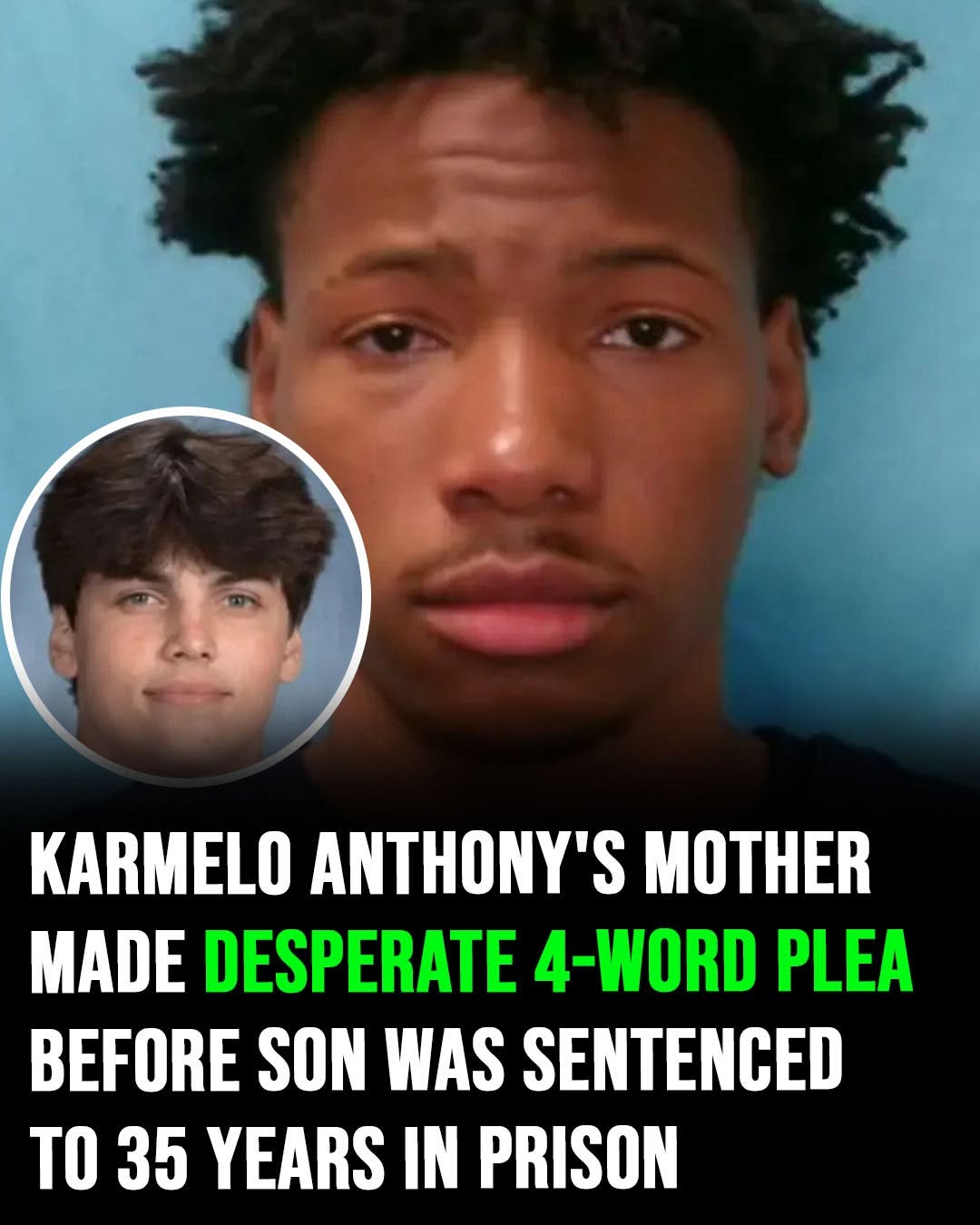
In the end, the law answered more loudly than any plea. Nineteen-year-old Karmelo Anthony was handed 35 years in prison for the murder of 17-year-old Austin Metcalf, a life-altering sentence born from a moment of violence at what should have been an ordinary high school track meet. His mother, voice shaking, used her last seconds before the court to beg the judge: “Please have mercy, Your Honor.” Those four words, simple and raw, carried the weight of every birthday, every memory, every fear of losing her firstborn to a concrete cell.
Across the aisle, Austin’s family spoke from a different kind of emptiness. His mother described talking to her son only at his grave, walking past his empty room, remembering a boy who was a “hugger,” a “peacemaker,” someone who brought calm instead of chaos. The verdict closed the case, but not the wound. One mother will visit a prison; the other will visit a cemetery. And between them lies a question with no real winner: what does justice look like when every path forward is built on loss?


