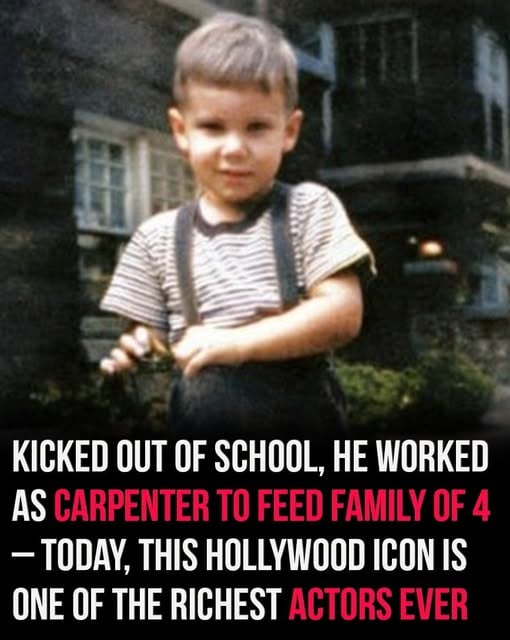
Harrison Ford’s story begins far from red carpets and studio gates: a middle-class home in Park Ridge, Illinois, with no Hollywood connections and no clear path to stardom. Expelled from college just days before graduation, he landed in Los Angeles with little more than stubbornness. Early studio contracts fizzled, producers dismissed him, and the work that did come felt small and unsustainable. To support his wife and young sons, he taught himself carpentry, building cabinets and decks while quietly refusing to abandon acting. That trade became his lifeline and his shield, allowing him to turn down demeaning roles and wait, patiently, for something worthy.
That patience finally collided with opportunity when his carpentry work and earlier collaboration with George Lucas led to an audition for a scruffy smuggler named Han Solo. Star Wars exploded, followed by Indiana Jones, and the former carpenter became one of cinema’s defining faces. Yet the man behind the icons never fully left the workshop. On his Wyoming ranch, flying planes, fixing fences, and working wood, Ford has remained the blue-collar craftsman who treats acting as a job, not a pedestal. His legacy is not just the box office numbers or the iconic costumes; it is the proof that a life built slowly—through rejection, discipline, and unglamorous work—can still reshape movie history.