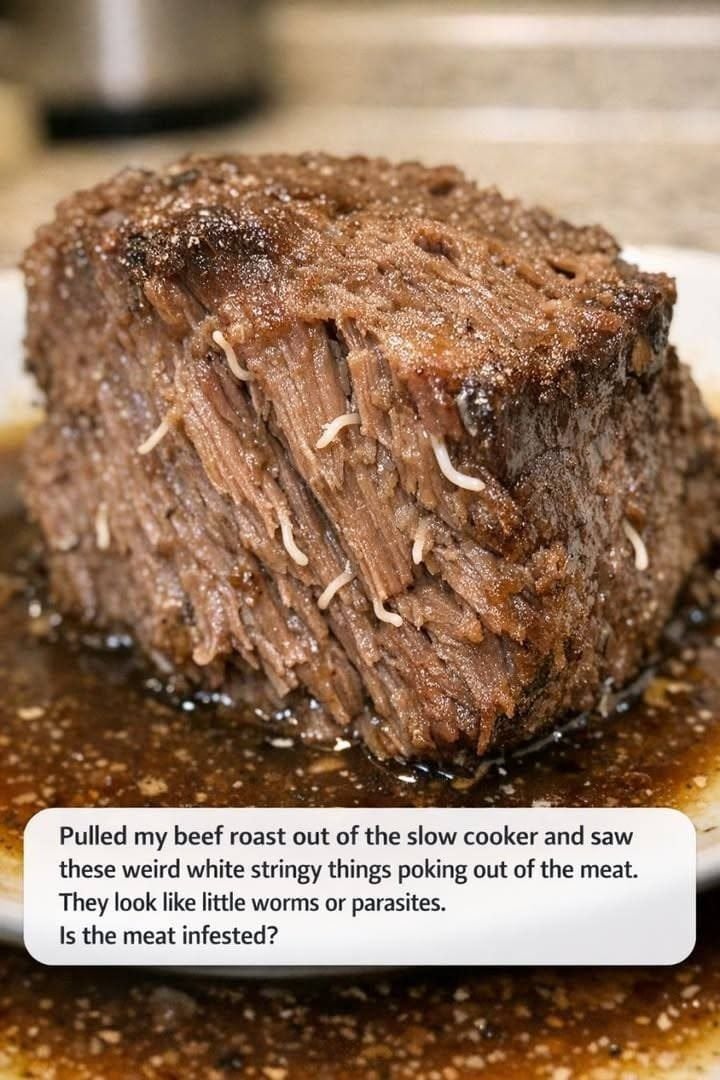
Those pale, stringy pieces that appear in slow-cooked beef are almost always just normal parts of the meat itself. Beef roasts are full of collagen-rich connective tissue that holds the muscle fibers together. When exposed to low, slow heat, that collagen breaks down, softens, and can show up as white, thread-like strands or gelatinous bits between the fibers. It may look unsettling, but in a properly cooked roast, it’s simply a sign that the tough tissue has melted into tenderness and flavor.
True parasites in beef are exceptionally rare in countries with modern inspection systems, and they cannot survive recommended cooking temperatures. Connective tissue will feel soft, slick, and easy to pull apart, while parasites would appear as distinct, firm, uniform structures. If your beef smells normal, was stored safely, and reached a safe internal temperature, those “worms” are almost certainly harmless collagen—nothing more than the science of slow cooking on your plate.