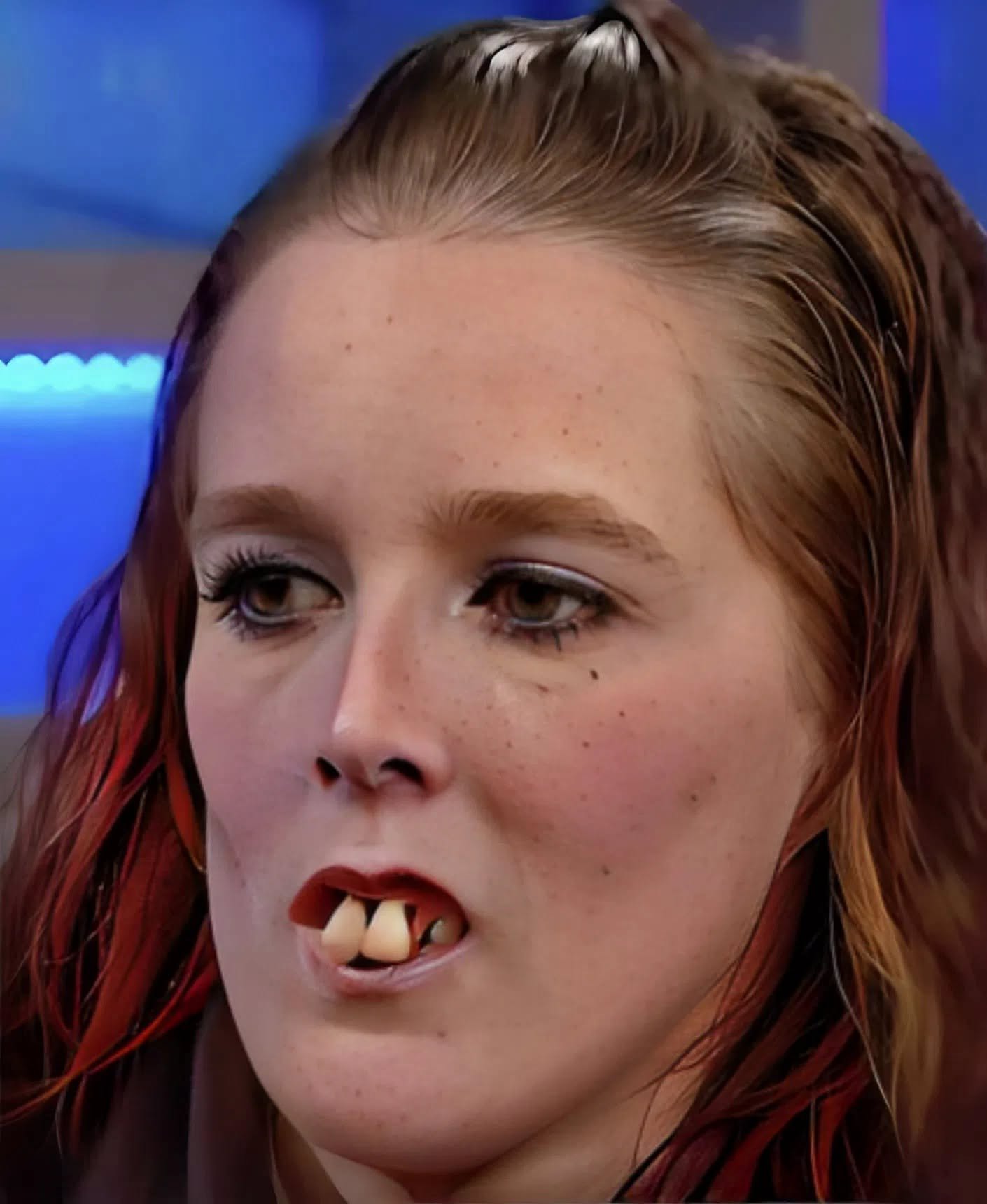
They never saw the moment she locked her phone and slid it under her pillow, as if distance could muffle the noise. Alone in the dark, every notification felt like a stone thrown through a window she couldn’t board up. She avoided mirrors, avoided crowds, avoided her own reflection in shop windows. To step outside was to risk becoming content again, another cruel screenshot passed around for laughs. Yet in the middle of that storm, a few quiet messages slipped through the barrage—gentle, clinical, kind. Dentists and doctors who saw not a monster, but a medical condition they could treat.
Accepting their help meant stepping back into the light. The surgeries were slow, painful, and expensive—except this time, strangers weren’t laughing, they were lifting. When she finally saw her new smile, she cried not from vanity, but from relief: to see a face that belonged to her, not to the mob. The same media that once devoured her now praised her “bravery,” splashing her transformation across screens. She declined most interviews. She owed the world nothing. Instead, she learned to move through life quietly, grocery shopping without stares, speaking without flinching, dreaming without dread. Her story survives as a fault line under every viral joke: a reminder that the punchline has a pulse, and that redemption, when it comes, is not owed by the victim—but by all of us watching.