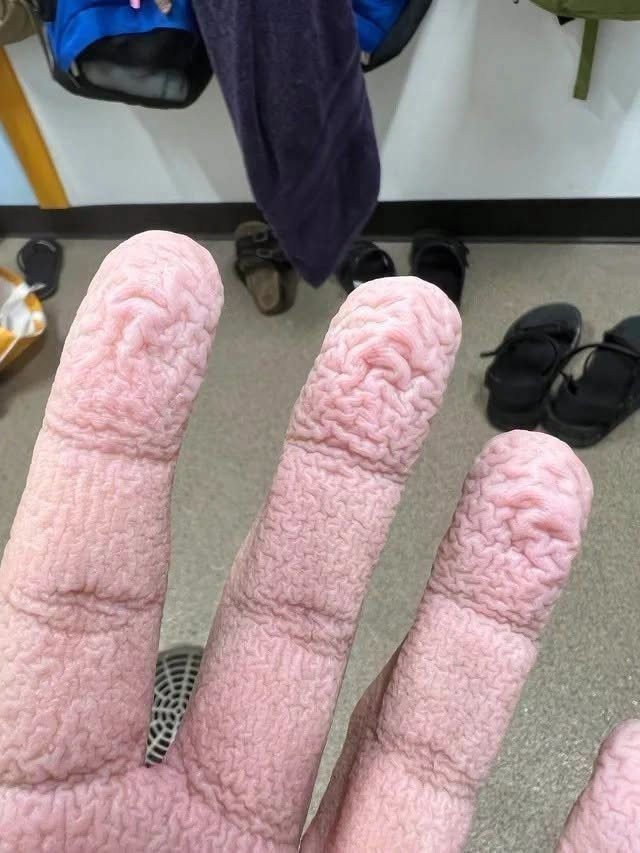
Your fingers don’t just wrinkle in water. They transform. What looks like innocent “pruning” is actually your nervous system quietly flipping a survival switch—one that could even reveal hidden disease. For most, it’s harmless. For some, it’s a warning. And once you know what those ghostly ridges really mea… Continues…
Those pale, ridged fingertips are your nervous system at work, tightening blood vessels with surgical precision to reshape your skin for better grip in the wet. It’s an ancient survival trick, honed over millennia so your ancestors could cling to slick rocks, haul dripping branches, and gather food in the rain without slipping. The transformation fades once you dry off, your vessels relax, and your skin quietly returns to normal, as if nothing extraordinary happened.
But when those wrinkles arrive too fast, stay too long, or come with pain, burning, itching, or color changes, they stop being a party trick and start becoming a message. Excessive or rapid wrinkling can hint at cystic fibrosis, medication side effects, nerve damage, or a compromised skin barrier. Even the absence of pruning can signal autonomic nerve problems. Paying attention—moisturizing, protecting your hands, and seeking medical advice when something feels off—turns a strange bathroom curiosity into an early-warning system you can’t afford to ignore.