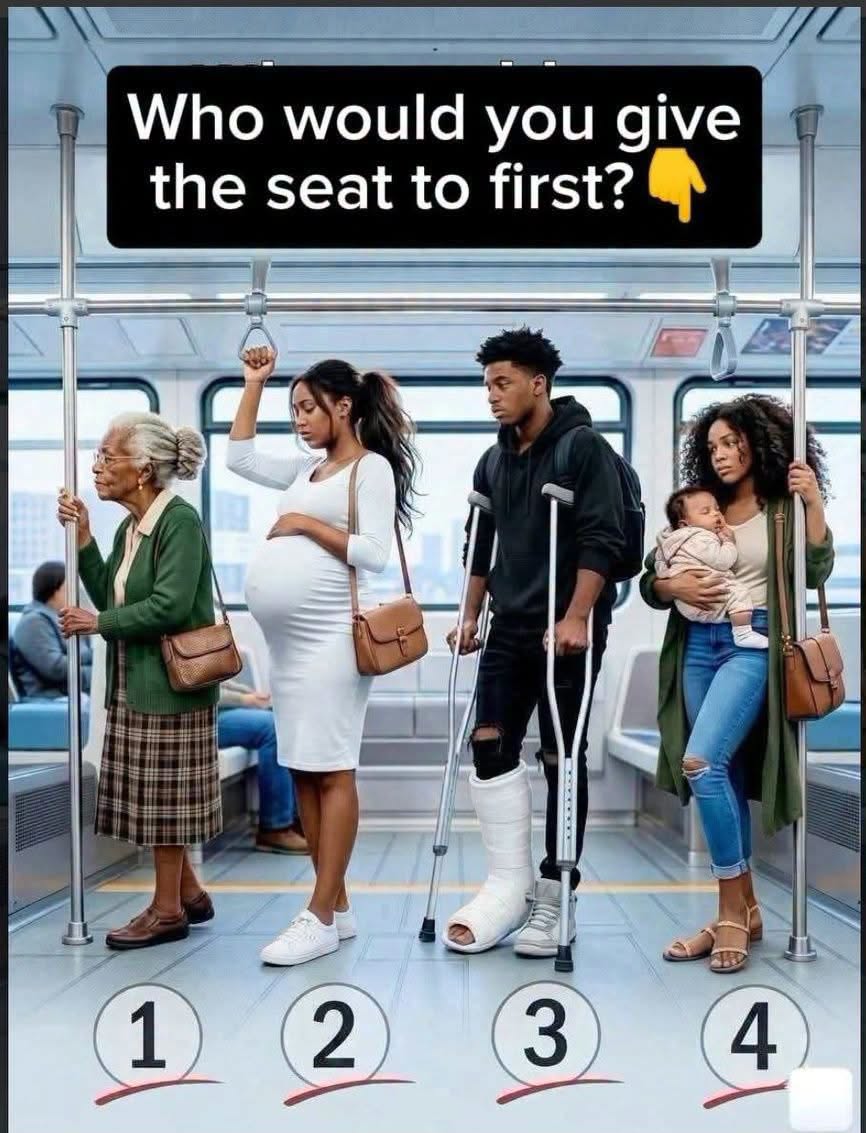
A seemingly simple image showing four passengers standing on public transportation has reignited an age-old question: Who should be offered a seat first?
The illustration features four individuals who may all have legitimate reasons to need a seat—an elderly woman, a pregnant woman, a man with a leg injury using crutches, and a mother carrying a sleeping baby. The image asks viewers to decide who should receive the available seat first, and the responses have been anything but unanimous.
At first glance, many people immediately choose the injured man. Standing on crutches while balancing with a broken leg can be physically exhausting and potentially dangerous, especially on a moving train or bus. Others argue that the elderly woman should be prioritized due to age-related mobility challenges and a higher risk of injury from falls.
Supporters of the pregnant woman point out that pregnancy places significant strain on the body. Maintaining balance on public transportation can be difficult, and sudden stops or movements may pose additional risks. Meanwhile, many believe the mother carrying an infant deserves the seat because she is responsible not only for her own safety but also for that of her child.
What makes the image so compelling is that there is no universally correct answer. Each person represents a different form of need, reminding us that not all disabilities, challenges, or physical burdens are immediately comparable.
Social media users have been divided. Some argue that medical necessity should come first, while others believe age should be the deciding factor. Many suggest that the truly considerate solution is for multiple seated passengers to stand up, ensuring that everyone who needs assistance receives it.
The image also highlights a broader issue: empathy in public spaces. In an increasingly fast-paced world, small acts of kindness—offering a seat, helping someone carry a bag, or simply paying attention to those around us—can make a significant difference.
Rather than revealing who deserves the seat most, the image serves as a reminder that compassion is not a competition. The real lesson may be that when several people are in need, society works best when more people choose to help rather than debate who is most deserving.
As the discussion continues online, one question remains: If you were sitting down and saw all four standing before you, would you offer your seat—and would others follow your example?