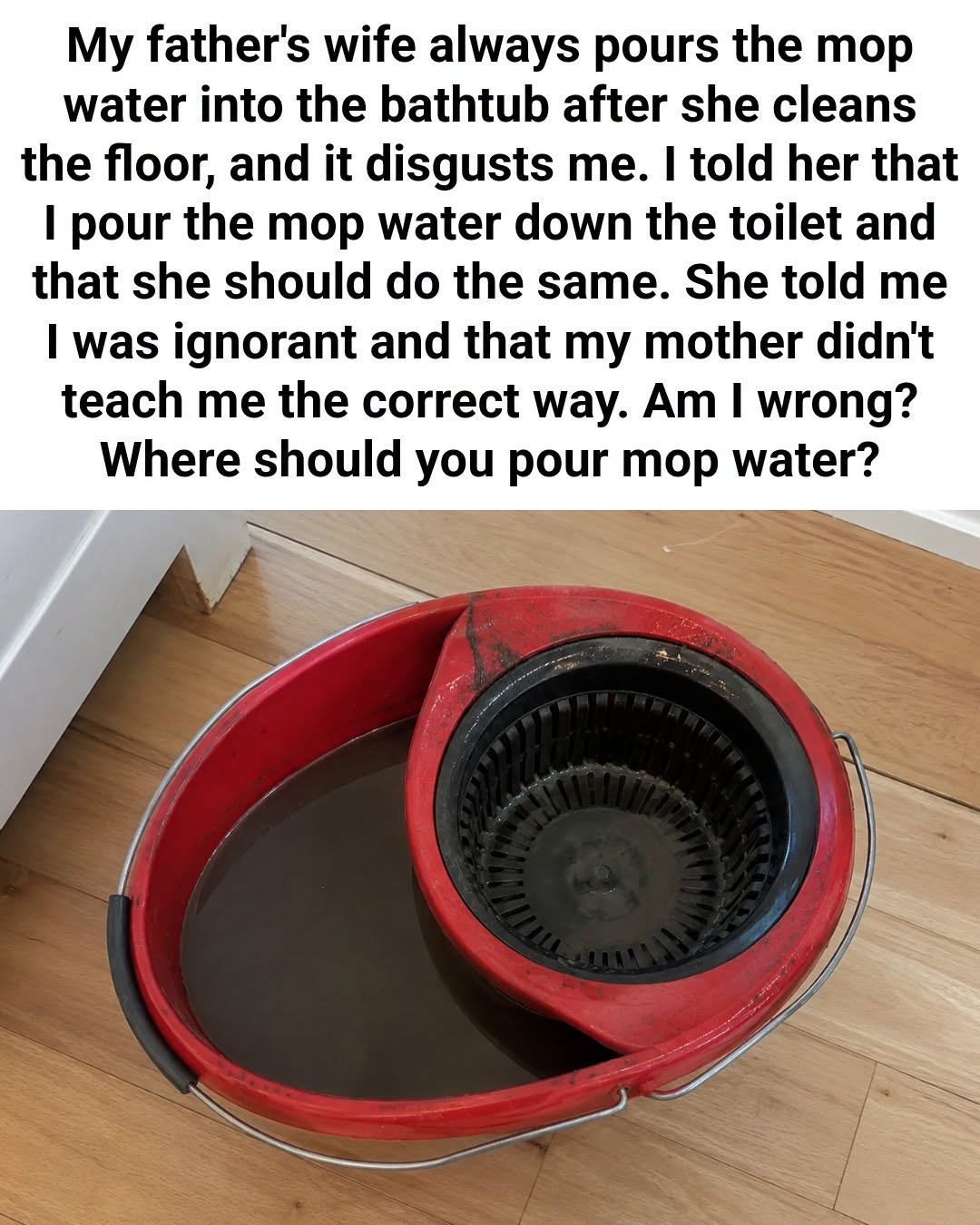
Dirty mop water isn’t just “a little used water.” It’s a cocktail of grit, hair, cleaner, bacteria, and whatever lived under your fridge, which is why the toilet is usually the safest everyday choice. Toilets are built to move waste, including suspended solids, straight into the sanitary sewer or septic system. A bathtub drain is smaller, easier to clog, and sits in the exact spot where people bathe, kids play, and pets get washed. Using it means you’re signing up to scrub and disinfect the tub before anyone steps in again, or you’re quietly hoping no one notices the invisible film of floor dirt under their feet.
A utility or laundry sink, if you have one, beats both for convenience and purpose. Wherever you pour, strain out chunks, hair, and debris first, and avoid dumping harsh chemicals into septic systems or storm drains. In shared spaces or someone else’s home, the real issue is respect: ask where they want mop water to go, agree on a spot, and clean that area afterward. A simple rule holds almost everywhere: utility sink first, toilet second, bathtub only in a pinch—and never the kitchen sink or the yard if cleaner’s involved.