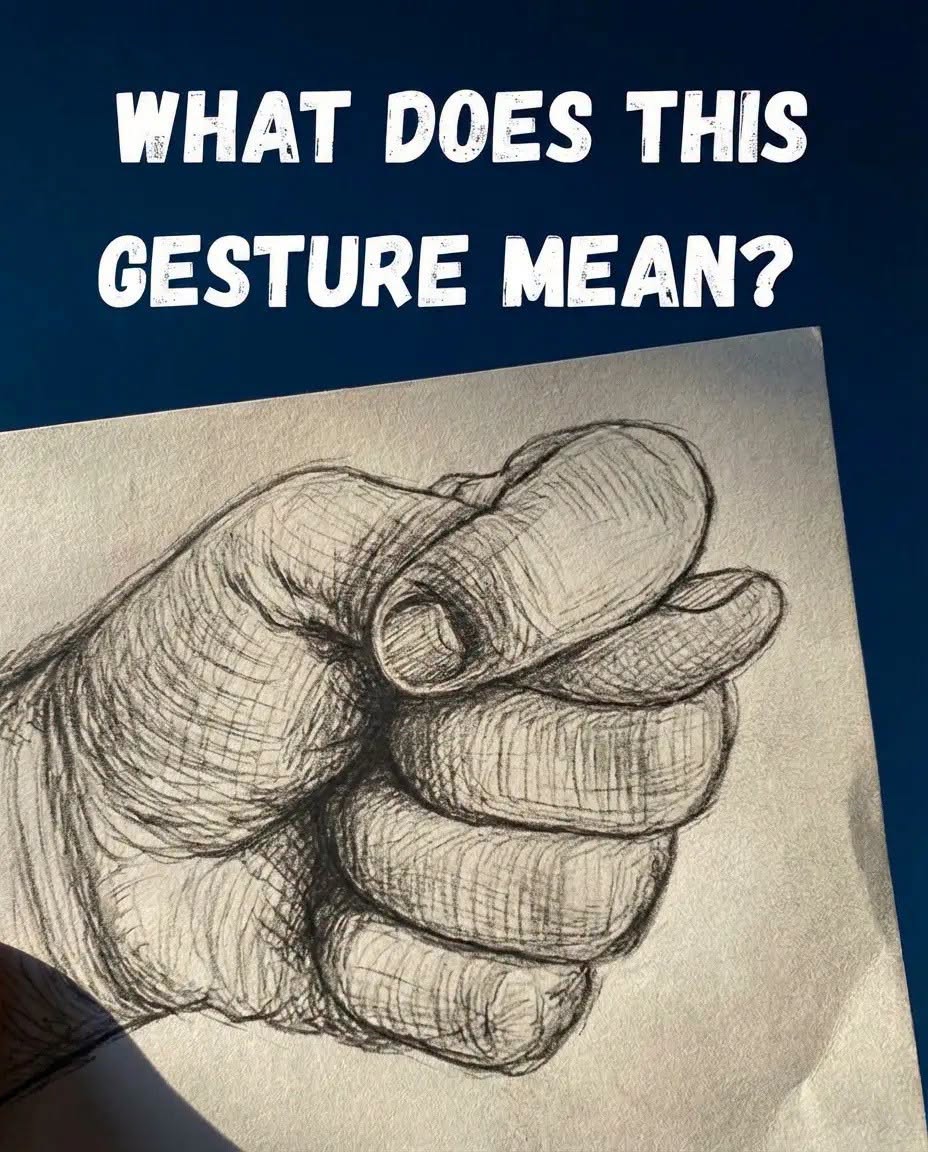
In an age when a wrong word could cost you your job, your safety, or your standing in a village, the fig gesture became a secret language of survival. It allowed ordinary people to say “enough” without inviting open war. A hand in a pocket, a thumb pressed between fingers, and suddenly the powerless possessed a private weapon—sharp enough to cut pride, soft enough to pass as nothing at all. Children learned it from parents, neighbors shared it with knowing smiles, and communities used it as a pressure valve against the suffocating weight of authority.
But its power was not only social; it was spiritual. To make a fig before a journey, in the face of gossip, or against envy was to draw an invisible circle of protection. It turned the body into its own amulet, the hand into a tiny shield against fate. In that small, defiant motion lived a profound human wish: to say no to both oppression and misfortune, even when you had no other weapon but your own flesh.