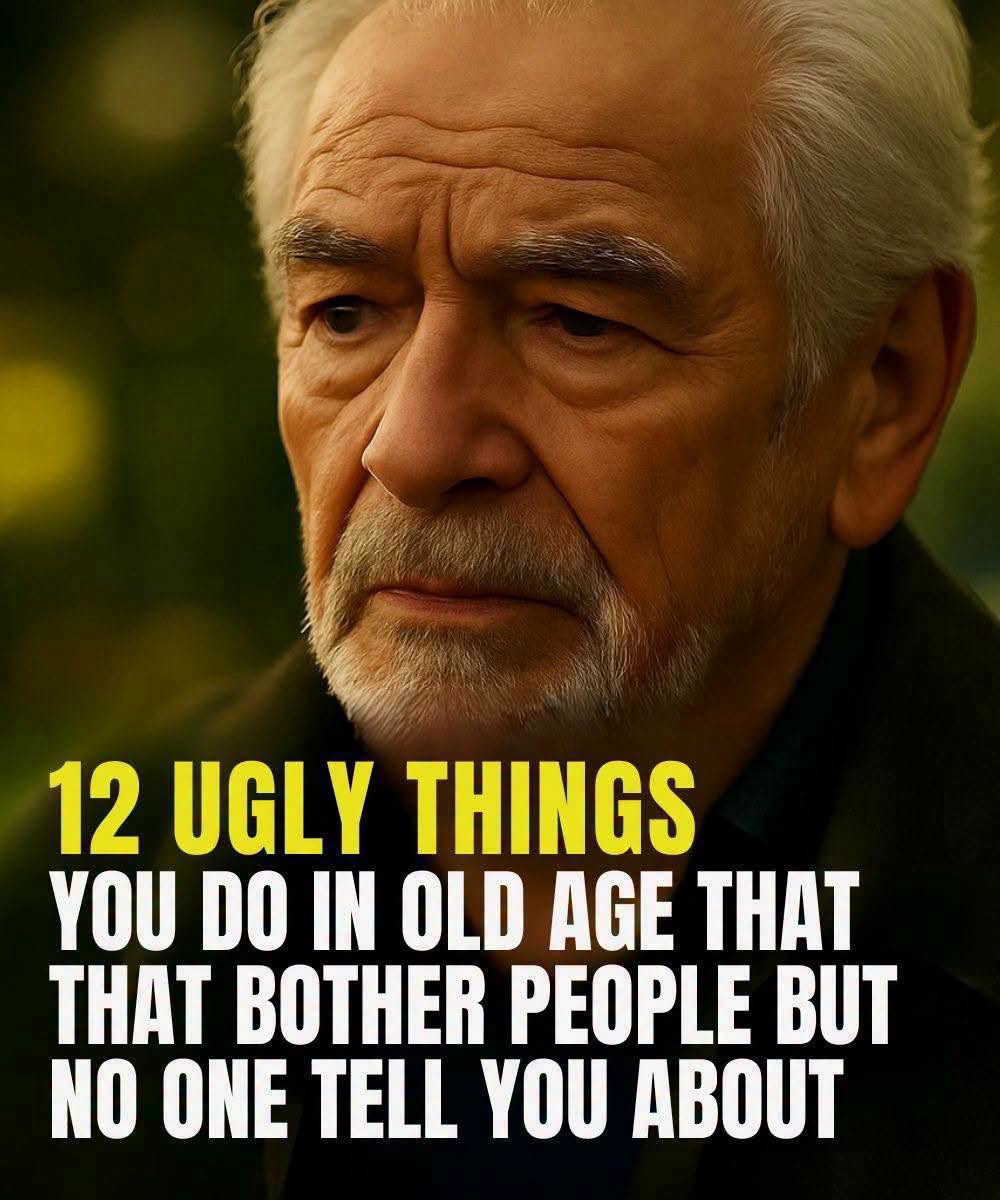
The golden years are supposed to be a time of wisdom, reflection, and peace, but for many, aging has become a slow descent into social isolation caused by behaviors that families are too afraid to address. We all know that relative—the one who dominates every conversation, refuses to embrace the modern world, or uses their age as a weapon to excuse inexcusable rudeness. It is the unspoken elephant in the room that destroys bonds and shatters harmony. But what if the “difficult” traits you’re witnessing in your elders aren’t just personality quirks, but avoidable habits that are silently poisoning your relationship?
Aging is an inevitable chapter of life that brings undeniable shifts not just to our physical appearance, but to our fundamental character. While we often excuse these changes as simple side effects of growing older, the reality is that many elderly individuals develop patterns of behavior that are profoundly exhausting for those around them. Out of a misguided sense of respect or perhaps a fear of offending those we love, we remain silent, watching as these habits erode the very connections they need most. If these individuals were aware of how their actions are perceived, they might have a chance to salvage their social circles, but as it stands, they are often unaware of their own destructive impact.
One of the most common pitfalls is constant complaining. While we naturally sympathize with the health struggles that accompany aging, there is a point where the relentless focus on ailments becomes the primary language of interaction. When every visit, phone call, or shared meal is consumed by a detailed list of aches and pains, friends and family begin to dread the encounter. This isn’t a lack of compassion on the part of the younger generation; it is a desperate need for balanced human connection. When their world shrinks to the size of their medicine cabinet, the people who love them struggle to maintain their own sense of well-being, eventually distancing themselves to survive the emotional fatigue.
Similarly, a rigid resistance to change can act as an impenetrable wall between generations. Whether it is a refusal to learn how to operate a smartphone or a stubborn insistence that “everything was better back then,” the constant dismissal of the modern world serves to shut down dialogue before it even begins. It signals to younger generations that their lives, their values, and their modes of communication are invalid. This rejection of the new doesn’t just alienate them from the present; it creates a dynamic where they are treated like relics, reinforcing their own belief that the world has no place for them anymore.
This often leads to the invasive habit of offering unsolicited advice. Having been on the planet for eight decades might provide experience, but it does not grant authority over someone else’s parenting, career, or finances. When advice is delivered as a command rather than a suggestion, it is perceived as an intrusion. It frames the relationship as a hierarchy of “knower” and “novice,” which destroys the equality needed for adult relationships. When they interrupt conversations to force their opinions into the spotlight, they aren’t just being rude—they are inadvertently telling their children and grandchildren that their own lived experiences are irrelevant.
Living in the past is another trap that keeps the elderly stuck in a time that no longer exists. While reminiscence is natural, it becomes a problem when it serves as a substitute for engaging with the present. Conversations that revolve entirely around “the good old days” can be draining for anyone who is trying to build a life in the current moment. This often coincides with a creeping, persistent negativity. For reasons that range from physical discomfort to the existential dread of life’s end, many seniors begin to view every scenario through a lens of cynicism. They anticipate the worst, voice their criticisms loudly, and inadvertently cast a shadow over every gathering.
The unfortunate side effect of these behaviors is the loss of the ability to truly listen. We often mistake hearing difficulties or fatigue for a lack of interest, but when an older person has spent years mastering the art of the monologue, they may forget that conversation is supposed to be a two-way street. They repeat the same stories over and over, forgetting who they told them to or simply lacking the patience to craft new memories. When they follow this with a judgmental critique of younger generations—calling them lazy, irresponsible, or lost—the bridge between the generations begins to collapse.
Even more concerning is the tendency to neglect self-care. Personal hygiene and daily health routines are the first lines of defense against being pushed to the social fringe. When an individual adopts the mindset that being unkempt is “normal with age,” they are signaling a surrender that makes it difficult for family members to be around them. This is often compounded by the egregious act of using age as a shield for bad behavior. Rudeness and offensive language are never acceptable, and hiding behind the guise of “I’m too old to change” is a refusal to remain a functional, contributing member of society.
The most tragic part of this decline is the refusal to learn anything new. The phrase “I’m too old for that” is a self-imposed prison sentence. It cuts them off from the tools that could connect them to their families, the hobbies that could keep their minds sharp, and the experiences that could bring them genuine joy. The truth is that no one is ever too old to be a student of life. By shifting their mindset, opening their hearts to new ways of thinking, and choosing to participate in the present rather than mourning the past, the elderly can transform their later years from a period of isolation into a chapter of serene, rewarding, and meaningful connection.