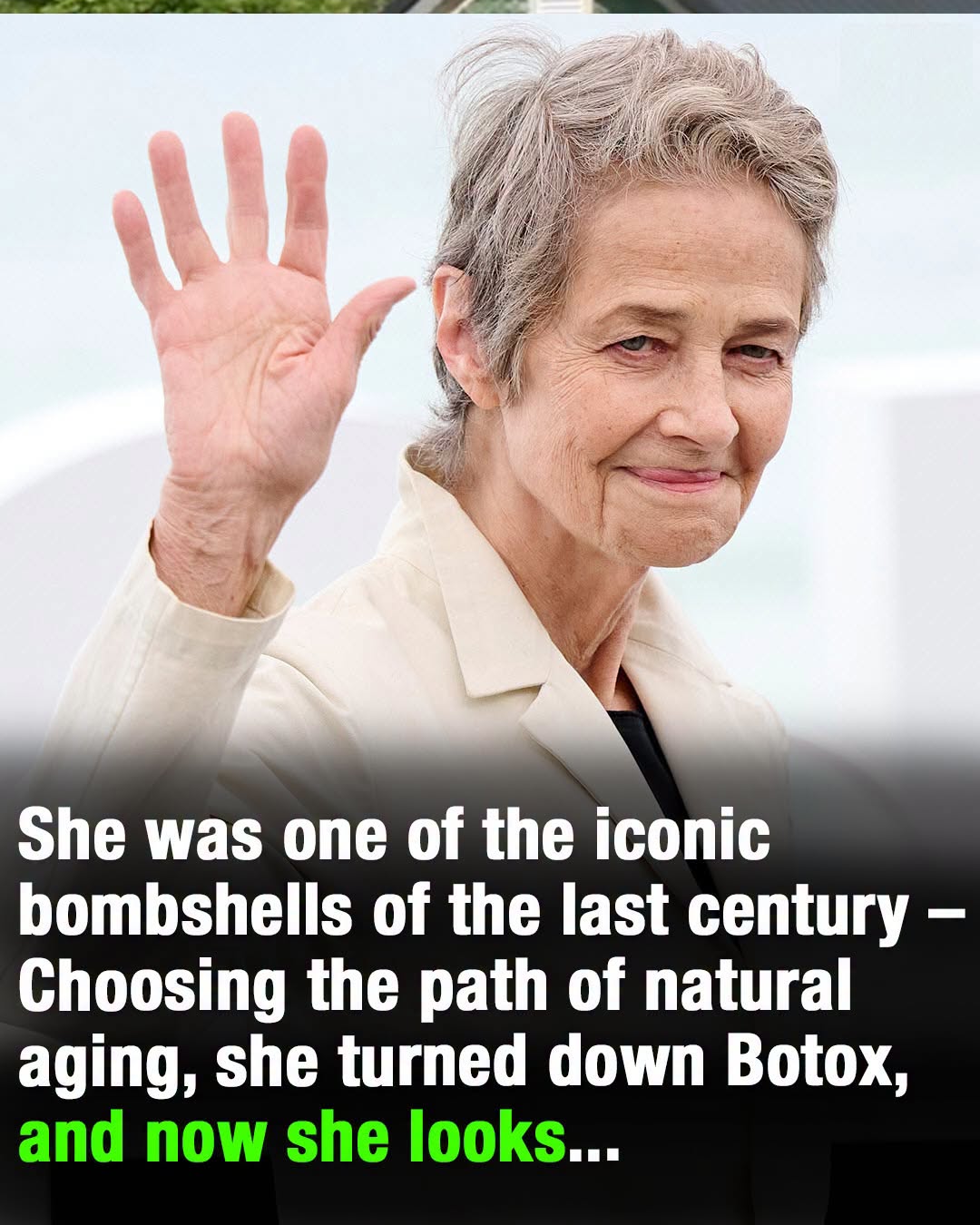
Charlotte Rampling’s beauty was never just about symmetry or youth; it was about presence. From the moment she appeared in films like Georgy Girl and The Damned, there was a quiet daring in the way she looked into the camera, as if refusing to make herself smaller or softer for anyone’s comfort. Decades later, that same refusal defines the way she has chosen to age. Her face, unaltered and expressive, carries the weight of joy, grief, risk, and reinvention—every line a record of a life fully inhabited rather than cosmetically erased.
Her habits are disarmingly simple: real food, movement, sunlight, rest. But beneath them lies something far more radical in a world obsessed with youth—self-acceptance. Rampling doesn’t pretend time hasn’t touched her; she invites it in and lets it stay. By challenging the belief that beauty has an expiration date, she offers a different script: one where growing older is not a failure, but an achievement. In doing so, she becomes more than an icon of the 1960s; she becomes a map for anyone longing to age without apology.