I hit the brakes so hard the car behind me honked.
For a few seconds, I just sat there with both hands locked around the steering wheel, staring at the narrow two-story house where half my childhood had lived.
Nobody had told me.
I called my mother immediately.
She answered on the fourth ring, sounding mildly distracted.
“Hello?”
“You sold Grandma’s house?”
Silence.
Then a sigh.
“Ken, lower your voice.”
“Lower my voice? Mom, you sold Grandma’s house.”
“Laura handled it. The paperwork is done.”
Laura.
Of course my sister had handled it.
I looked back at the house, and something hot rose in my throat.
“You promised we would talk about it after the funeral.”
“We did talk about it.”
“No,” I said. “You and Laura talked about it. Then you did it behind my back.”
My mother made that clipped little sound she always made when she thought emotions were embarrassing.
“Don’t be dramatic. The house was old. It needed work. Selling quickly was best for the family.”
“Best for who?”
She didn’t answer.
That was answer enough.
Grandma had only been gone six weeks, and somehow my mother and sister had already emptied enough of her life to sell the place without letting me walk through it one last time.
I don’t remember ending the call.
I only remember pulling over two streets away because my hands were shaking too badly to drive.
Grandma’s house was not some grand estate.
It was small, old, and stubborn.
The floors creaked. The upstairs bathroom was barely big enough to turn around in. The kitchen cabinets had been built by Grandpa Shawn before my mother was even born.
The dining room wallpaper had tiny blue flowers on it for thirty years because Grandma Cindy said changing it would “confuse the room.”
Every good thing from my childhood lived inside that house.
When my parents fought, that was where I wanted to be.
When I got my heart broken at seventeen, Grandma made tea and let me cry at her kitchen table.
When I lost my first job in my twenties, Grandpa opened the garage fridge, handed me a root beer, and said, “You fix a bad year the same way you fix a fence. One board at a time.”
That house held people even after they were gone.
Laura only ever saw square footage.
My sister was three years older than me and had been measuring love in money for as long as I could remember. When Grandpa died, she asked about his truck before she asked about funeral arrangements.
By the time Grandma got sick, Laura was already circling.
“It’s too much house for one person.”
“Maintenance is expensive.”
“Mom shouldn’t be stuck dealing with probate.”
Every conversation somehow became about assets.
Meanwhile, I was the one driving Grandma to appointments, fixing the porch light, mowing the yard when my back allowed it, bringing groceries, and sitting with her through the quiet afternoons after chemo.
Grandma knew what Laura was like.
Near the end, she squeezed my hand one evening and said, “Don’t let them strip this place like vultures.”
I had smiled and told her not to talk like that.
I should have listened harder.
After the sale, I stopped speaking to my mother and Laura.
Not with some dramatic announcement.
I simply stopped answering.
For three weeks, I kept thinking about everything that was probably gone.
Grandma’s handwritten recipes in the blue tin.
Grandpa’s tools in the garage.
The Christmas ornaments with our names written on masking tape.
The unfinished quilt.
The photo albums in the upstairs closet.
The ceramic bird I made in third grade that Grandma displayed for twenty years like it belonged in a museum.
Then one Thursday evening, an unknown number called.
I almost ignored it.
But something in me had been jumpy since the SOLD sign.
“Hello?”
A woman answered quickly, nervous and apologetic.
“Hi… is this Ken?”
“Yes.”
“My name is Sharon. My husband Ian and I recently bought your grandmother’s house.”
Before I could respond, she rushed on.
“We know your sister treated you horribly.”
I froze.
“What?”
There was a pause, then a man took the phone.
“I’m sorry to call out of nowhere,” he said. “We got your number from Porter across the street. He said if we found anything, we should call you, not your mother or sister.”
My pulse quickened.
“What did you find?”
He lowered his voice.
“You should really see it yourself.”
I was already reaching for my keys.
By the time I pulled up, the sun was going down.
For one terrible second, the house looked exactly the same.
Then Sharon opened the door, and the illusion broke.
Some furniture was gone.
Some remained.
The hall rug was still there.
The third stair still creaked.
On the console table sat Grandma’s chipped glass bowl for peppermints.
My throat tightened.
“They didn’t take everything.”
Ian gave a strange little laugh.
“No. That’s kind of the issue.”
He led me upstairs to the attic access in the hallway ceiling.
The attic smelled warm, dry, and faintly sweet.
At the far wall, Ian knelt beside exposed paneling.
“We were having electrical work done,” he said. “The contractor found a draft behind the insulation.”
He pulled away a loose board.
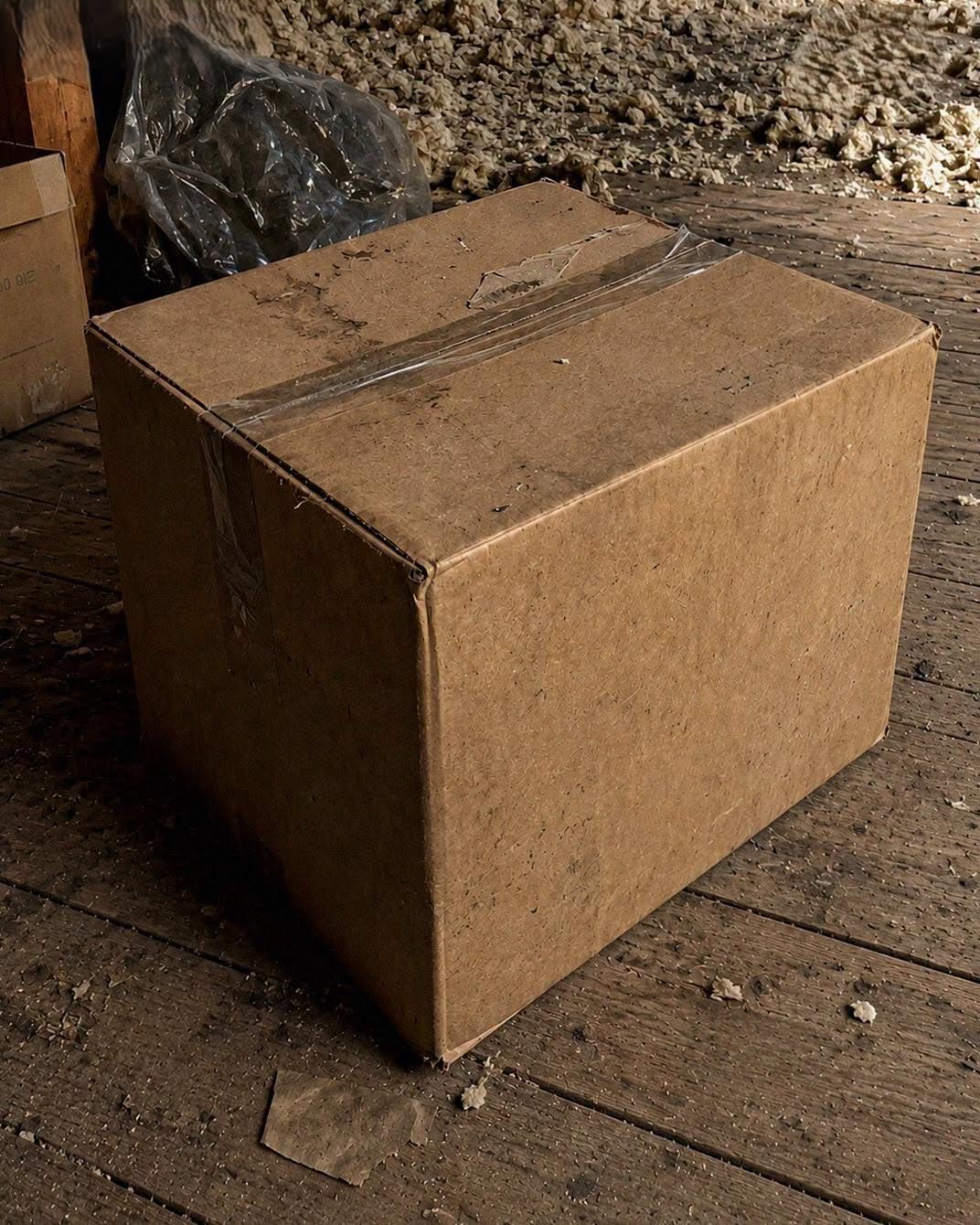
Behind it sat a small wooden crate.
Sharon whispered, “We didn’t open it. Porter said if anything was hidden, it was probably meant for family.”
I knelt beside the crate.
There was no name on the outside.
Only a small carved star in one corner.
My breath caught.
Grandpa used to carve that same star on the things he made for me.
I opened the lid.
On top was an envelope.
My name was written across it in Grandma’s handwriting.
For Kenny. Only Kenny.
My hands started shaking.
Inside the envelope was a letter folded around a brass key.
Kenny,
If you are reading this, then I was right not to trust how things would go after I was gone.
I stopped breathing for a moment.
I know your mother. I know Laura. And I know grief makes some people softer and some people greedier. I am afraid you would be treated like the softer sort.
My vision blurred.
So I put aside what I could where only the right hands would find it. Your grandfather helped me make this compartment years ago after your mother started snooping in places that were none of her business.
I laughed once through tears.
That sounded exactly like Grandma.
Inside this crate, you will find the deed transfer papers to the lake cabin property in Bellmere, already signed into your name six years ago and properly recorded with my lawyer, Dawson. There is also the key to the cabin, safety deposit box records, and letters explaining the rest.
I stared at the words.
The lake cabin.
Nobody talked about it anymore.
Grandpa’s brother had left it to him decades ago, but family drama had buried it so deeply that I assumed it had been sold years before.
Laura always said there was nothing there but rot and mice.
Apparently, Laura had lied about that too.
Beneath the letter were legal papers wrapped in wax paper.
Below those were bank documents, a velvet pouch, and more envelopes.
“I think…” I swallowed hard. “I think my grandmother hid an inheritance from the rest of my family.”
Ian stared at the crate.
“Well,” he said quietly. “That’ll do it.”
The velvet pouch held Grandma’s wedding ring.
The note inside said:
This goes to the person who always showed up. Thank you, Kenny.
I sat down on the dusty attic floor and cried.
Sharon and Ian stepped back, pretending not to notice until Sharon quietly offered me a box of tissues.
“I’m sorry,” she said.
I wiped my face.
“No. This is the first good surprise I’ve had since she died.”
Sharon smiled softly.
“I think she was counting on that.”
Later, downstairs in Grandma’s kitchen, Sharon made tea while Ian spread the documents carefully across the table.
“I’m not a lawyer,” he said, pointing to the recorded deed paperwork, “but this looks real.”
It was.
Grandma had done everything six years earlier, while she was still healthy, still driving, still pretending not to hear Laura fishing for financial details every Thanksgiving.
Then Sharon said, “There’s one more thing.”
She handed me a spiral notebook.
Grandma’s recipes.
I covered my mouth.
“Your mother and sister threw out a lot,” Sharon said gently. “We stopped them from taking some boxes to the curb because it felt wrong. They’re in the dining room.”
I stood so fast the chair scraped the floor.
The boxes held photo albums, Grandpa’s measuring tools, Christmas ornaments, my ceramic bird, Grandma’s apron, her unfinished quilt, the blue recipe tin, and even the old garage radio.
I hugged Sharon before thinking about whether it was strange.
She hugged me back.
Ian leaned against the doorway.
“Honestly, your sister gave me bad vibes immediately.”
I laughed through fresh tears.
“What did she do?”
“She kept asking if the attic had been fully cleared and whether we planned to renovate right away. Too interested in what might still be hidden.”
Of course she was.
I took the crate, the boxes, and the papers home that night.
The next morning, I called a lawyer.
I needed someone calm to tell me whether the deed was real, whether the account existed, and whether Grandma had truly outmaneuvered the two women who had spent years underestimating her.
She had.
The cabin was legally mine.
So was the savings account.
The safety deposit box held more family jewelry, Grandpa’s pocket watch, and another letter from Grandma that mostly included instructions about repairing the dock and not trusting raccoons.
Then came the part I dreaded.
Telling my mother and Laura.
I did not do it in person.
I emailed them.
I explained that Grandma had legally transferred the Bellmere cabin and related assets into my name years before her death. I told them I had retained counsel, and any attempt to interfere would be treated accordingly.
Laura called within four minutes.
I let it ring.
Then Mom called.
Then Laura texted.
You sneaky little liar. She would never do that without telling us.
I replied:
She did. Which says more about you than it does about me.
My mother sent a longer message filled with wounded confusion.
I don’t understand why your grandmother would hide something so important from her own daughter.
I wrote back:
Because she knew exactly who you were when money got involved.
Then I turned off my phone.
A week later, I drove to Bellmere.
The cabin was smaller than I remembered and more beautiful than I expected.
Grandpa’s old canoe still rested upside down beside the shed.
The dock leaned a little.
The roof needed work.
Pine needles covered the steps.
But the lake glittered exactly the same way it had when I was a child, like the light itself lived there.
I unlocked the door with Grandma’s brass key and stepped inside.
Dust.
Old wood.
A plaid blanket on the couch.
Fishing lures on the shelf.
They had left me a whole world.
Not polished.
Not profitable.
Better than that.
Alive.
I sat on the porch until sunset, reading Grandma’s letters again.
The house in town was gone.
I could not undo that.
Some losses stay losses, no matter how beautiful the ending tries to be.
But the cabin was different.
It was not just an inheritance.
It was a correction.
Proof that Grandma had seen me clearly.
Proof that sometimes the people who love you best protect you quietly, years before you understand why.
I go there often now.
Sometimes my mother tries to circle back into my life. Sometimes I answer. Sometimes I don’t.
Laura still talks about fairness when what she really means is access.
I don’t fight with them much anymore.
Grandma already won that fight for me.
So yes, my mother sold Grandma’s house without telling me.
For a while, I thought that was the whole story.
But Grandma had written a better ending long before any of us knew it.
She hid it behind a wall, beneath a carved star, waiting for the right hands to find it.
And when I finally stood on that cabin porch with her key in my hand, I understood the truth.
They had sold my childhood like it was just another transaction.
But Grandma had left me something they could never price, never touch, and never take.
She left me home.