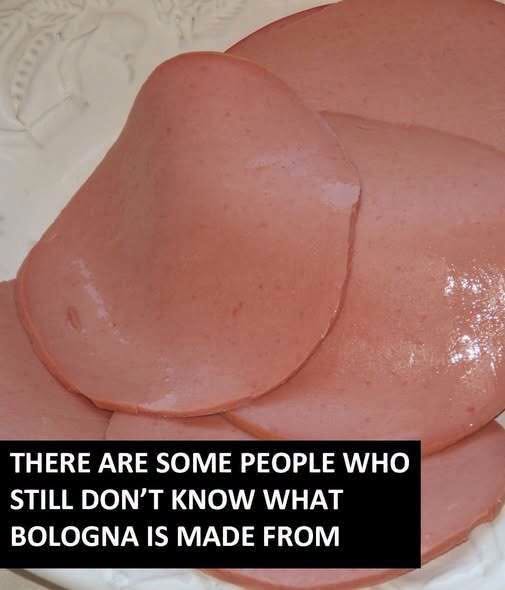
Most people never realize that bologna isn’t chaos in a casing; it’s the opposite. It’s the end point of centuries-old sausage craft, streamlined for a world that wants cheap, soft, predictable food. What began as mortadella in Italy—fragrant, speckled with fat cubes and spices—was slowly stripped of its visible character as it crossed the ocean. In America, the goal became uniformity: no surprises, no challenging textures, nothing that might make a hurried eater pause.
Today’s bologna is tightly regulated, built from standard cuts of meat and fat, processed into an almost unnaturally smooth paste, then cooked into submission. Its very blandness is its design. It’s not a horror story, and it’s not a delicacy; it’s a compromise. Each slice is a quiet deal between tradition and industry, flavor and efficiency, our convenience and our willingness not to look too closely.