Sometimes the internet surprises us with photographs of strange-looking objects that seem impossible to identify at first glance. Whether they come from an old attic, a flea market, a garage sale, or a family collection that has been passed down through generations, these mysterious items often leave people wondering about their purpose. Fortunately, online communities have become remarkably skilled at solving such mysteries.
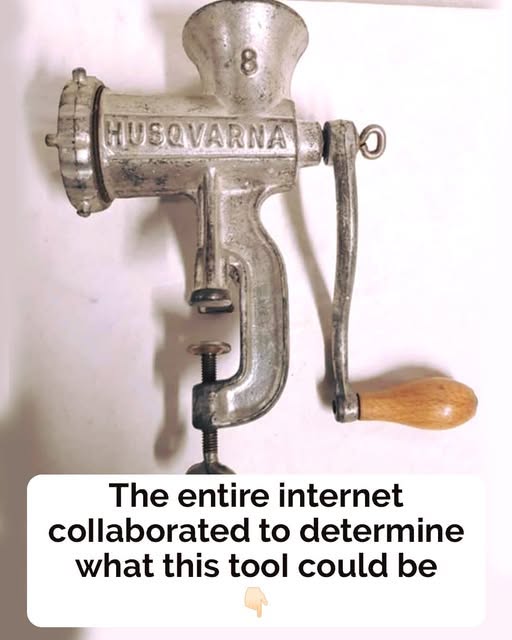
Every day, thousands of users work together to identify forgotten tools, household items, historical artifacts, and unusual inventions that might otherwise remain unexplained. One object that recently attracted attention online was a heavy metal tool with a design that looked unfamiliar to many younger viewers. The item featured a sturdy body, a hand-operated crank, and a mechanism that appeared to be designed for processing materials.
At first glance, some people guessed it might be a machine part, a workshop tool, or even a piece of antique farming equipment. However, after discussion among internet users, the object’s true identity quickly became clear. The mysterious device was identified as a traditional meat mincer, also known as a meat grinder.
For many decades, this tool was a common sight in households around the world. Before the widespread availability of electric kitchen appliances, families often relied on manual equipment to prepare food. A meat mincer allowed people to grind meat at home, giving them greater control over texture, freshness, and ingredients.
The basic design of a traditional meat grinder is surprisingly effective. Pieces of meat are placed into an opening at the top of the device. A hand crank turns an internal screw mechanism that pushes the meat toward a metal plate containing small holes. As the meat is forced through these openings, it emerges in fine strands. The process is simple, yet it revolutionized food preparation in homes and small businesses for many years.
Although meat grinders are primarily associated with processing meat, their uses have always been much broader. Depending on the model and attachments available, these devices can also be used to process fish, vegetables, fruits, and other food ingredients. Many home cooks used them to prepare fillings, spreads, sauces, and mixtures for various traditional recipes. Their versatility made them an essential kitchen tool long before food processors became common.
The development of mechanical meat grinders dates back to the nineteenth century. During this period, inventors across Europe were creating devices designed to make everyday tasks more efficient. One of the early designs commonly associated with the evolution of the meat grinder is linked to German inventor Karl Drais. While the technology has changed significantly over time, these early innovations helped establish the foundation for the machines that would later become standard kitchen equipment.
In the nineteenth and early twentieth centuries, preparing food often required substantial manual labor. Purchasing pre-ground meat was not always an option, especially in rural areas. Families frequently bought larger cuts of meat and processed them at home. A meat grinder made this task much easier, reducing preparation time while allowing people to use ingredients more efficiently and minimize waste.
Many traditional meat grinders were constructed from cast iron or other durable metals. Their solid construction allowed them to withstand years of frequent use. Some antique models have survived for generations and can still function today with proper maintenance. It is not uncommon for collectors and cooking enthusiasts to restore vintage grinders and use them for demonstration purposes or even occasional food preparation.
The popularity of manual meat grinders continued well into the twentieth century. They were commonly attached to tables or countertops using a clamp mechanism that held them securely in place during operation. This practical design allowed users to apply force to the crank without worrying about the machine moving. The setup was simple, reliable, and effective.
As electricity became more accessible in homes, kitchen technology began to evolve rapidly. Manufacturers started introducing electric meat grinders that could perform the same tasks much faster and with significantly less effort. These new machines reduced the physical work required and made food preparation more convenient for families, restaurants, and butcher shops alike.
Modern electric meat grinders are capable of processing large quantities of meat in a relatively short amount of time. Many models include multiple grinding plates that allow users to choose different textures, from coarse to fine. Some units also feature attachments designed for making sausages, shaping specialty foods, or handling other kitchen tasks. These improvements have expanded the functionality of meat grinders far beyond their original purpose.
Food safety and quality control are among the reasons why some people continue to use meat grinders today. Grinding meat at home allows users to know exactly what ingredients are being included. This level of control can be especially valuable for individuals who prefer fresh ingredients or who want to create custom blends for specific recipes.
The internet’s fascination with old tools like the meat grinder highlights an interesting aspect of modern culture. As technology advances, many objects that were once common household items gradually disappear from everyday life. Younger generations may encounter these tools only through photographs or museum displays, making their original purpose difficult to recognize at first glance.
Online communities play an important role in preserving knowledge about these historical objects. Enthusiasts, collectors, historians, and everyday users often share information that helps identify forgotten items and explain their significance. Through discussion and collaboration, they contribute to a better understanding of how people lived and worked in earlier periods.
Antique kitchen equipment also provides a fascinating glimpse into the history of food preparation. Every tool reflects the challenges and innovations of its era. Meat grinders, in particular, demonstrate how simple mechanical engineering solutions could dramatically improve efficiency in the kitchen long before the arrival of modern appliances.
Many vintage meat grinders have become collectible items. Collectors often appreciate their craftsmanship, durability, and historical value. Some restored examples are displayed as decorative pieces, while others remain functional reminders of traditional cooking methods. Their continued popularity among collectors shows how everyday household tools can become important cultural artifacts over time.
The story of the meat grinder illustrates how practical inventions evolve to meet changing needs. What began as a manually operated device eventually developed into a sophisticated kitchen appliance used in homes and commercial settings around the world. Despite technological advances, the fundamental principle behind the machine remains remarkably similar to the designs used more than a century ago.
Today, when people encounter an unfamiliar object online, the collective knowledge of internet communities often helps uncover its identity. The meat grinder is just one example of a once-common tool that continues to spark curiosity among those seeing it for the first time. Its history serves as a reminder of the ingenuity behind everyday inventions and the important role they played in shaping daily life for generations.