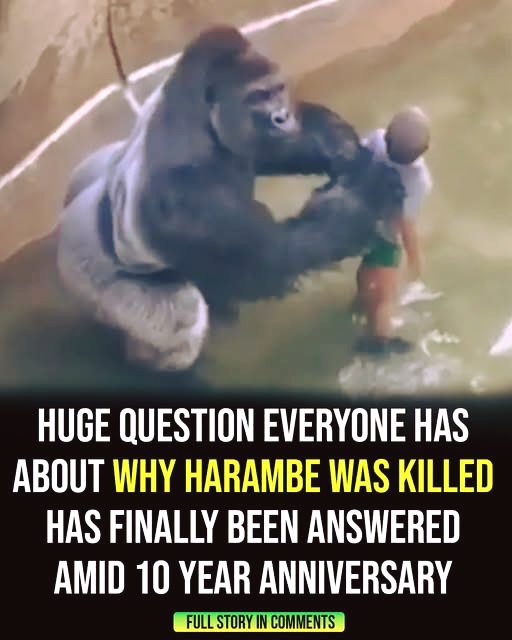
The story of Harambe remains one of the most widely discussed and emotionally charged incidents in modern zoo history. It continues to raise questions about animal welfare, public safety, and how quickly life-or-death decisions must be made in emergency situations involving wildlife. Harambe was a western lowland gorilla living at the Cincinnati Zoo & Botanical Garden in Ohio. Born in captivity, he spent most of his life under professional care, where staff monitored his health, behavior, and social interactions as part of conservation and educational programs.
On May 27, 2016, Harambe celebrated his 17th birthday. Just one day later, on May 28, a critical incident occurred that would change public discussion about zoos and captive animal management worldwide. A three-year-old boy climbed through a public barrier and entered the gorilla enclosure after falling into a moat-like area. The enclosure was designed with multiple safety features, but the child managed to bypass the outer protective fencing before reaching the restricted habitat.
Zoo staff immediately activated emergency protocols. Visitors were evacuated from the immediate viewing area, and responders attempted to manage the situation without further endangering the child or the animals in the enclosure. Within the enclosure, Harambe approached the child. Reports from zoo officials described a tense and unpredictable situation in which the gorilla moved through shallow water while maintaining close proximity to the boy.
Witness videos and official statements later showed Harambe dragging and holding the child at certain points. Experts noted that such behavior can be difficult to interpret, as gorilla movements may appear protective, curious, or forceful depending on context. Zoo officials emphasized that the situation was highly unstable and that the child was in immediate danger. Because of the size and strength of an adult male gorilla, physical interaction posed significant risk even without aggressive intent.
After careful evaluation of the unfolding event, the zoo’s dangerous animal response team made the decision to use lethal force. Harambe was fatally shot in order to ensure the child could be safely removed from the enclosure. The child was rescued shortly afterward and survived the incident with non-life-threatening injuries. Emergency medical teams evaluated him immediately after he was brought out of the enclosure.
Following the incident, the Cincinnati Zoo released statements defending the decision, explaining that the response was necessary given the unpredictable nature of the situation and the immediate risk to human life. Public reaction to the incident was swift and deeply divided. Some people expressed support for the zoo’s decision, emphasizing the priority of human safety in emergency situations involving dangerous wildlife.
Others questioned whether non-lethal options, such as tranquilization, could have been used instead. However, wildlife experts later clarified that tranquilizer darts are not immediate in effect and can take several minutes to fully sedate large animals. During that delay, sedatives can also cause unexpected reactions, including increased agitation or movement, which could have further endangered the child in the enclosure. This factor was widely discussed by zoological professionals.
As public debate continued, attention also turned to enclosure safety standards and parental supervision. The child’s access to the barrier raised questions about how such incidents can be prevented in public zoo environments. The child’s parents faced public scrutiny online, though official investigations focused primarily on the circumstances of the enclosure breach and the response protocols used by zoo staff.
Authorities did not pursue criminal charges related to the incident. The primary conclusion was that it was a tragic accident involving multiple layers of supervision and safety systems that were ultimately bypassed. In the years that followed, Harambe’s death became a cultural reference point far beyond the original event. It was widely shared and discussed on social media, often symbolizing broader conversations about wildlife captivity and internet culture.
Some online commentary exaggerated or misrepresented official statements over time, leading to confusion about certain details. However, the core facts of the incident remain grounded in verified reports from the Cincinnati Zoo and responding authorities. Conservation experts have since continued to use the incident as a case study in zoo safety procedures and crisis response training. It is often referenced in discussions about enclosure design and visitor protection.
The zoo itself later implemented additional safety measures to prevent similar incidents, including reviewing barrier designs and reinforcing visitor supervision policies in high-risk areas. Public discussions about Harambe also expanded into broader debates about the ethics of keeping large, intelligent animals in captivity. These conversations continue among zoologists, conservationists, and animal welfare organizations.
While opinions remain divided, most experts agree that the decision made on that day was driven by the immediate need to protect human life in a rapidly evolving emergency situation. Over time, Harambe’s story has remained a reminder of the complex balance between human safety and animal welfare in managed wildlife environments. It highlights how quickly situations can escalate when barriers are breached.
The incident continues to be referenced in media, documentaries, and public discussions, often as an example of how emergency protocols are applied under extreme pressure. Ultimately, the Harambe case remains significant not only because of the tragic loss of an animal, but also because it sparked ongoing conversations about safety, responsibility, and the challenges faced by modern zoological institutions.
It serves as a lasting reminder that even well-designed systems can be tested by unpredictable events, and that decisions in such moments are often made within seconds under intense pressure. Today, Harambe’s legacy is remembered in different ways by different people, but the factual details of the incident continue to be documented as part of zoological and public safety history.