Family heirlooms often come with stories, memories, and a connection to generations past. Sometimes those treasures are easy to recognize—a cherished photo album, a handmade quilt, or a piece of antique furniture that has been part of the family for decades.
Other times, however, people inherit objects that seem completely unfamiliar.
That was exactly the situation a friend of mine found himself in while sorting through belongings left behind by his grandparents.
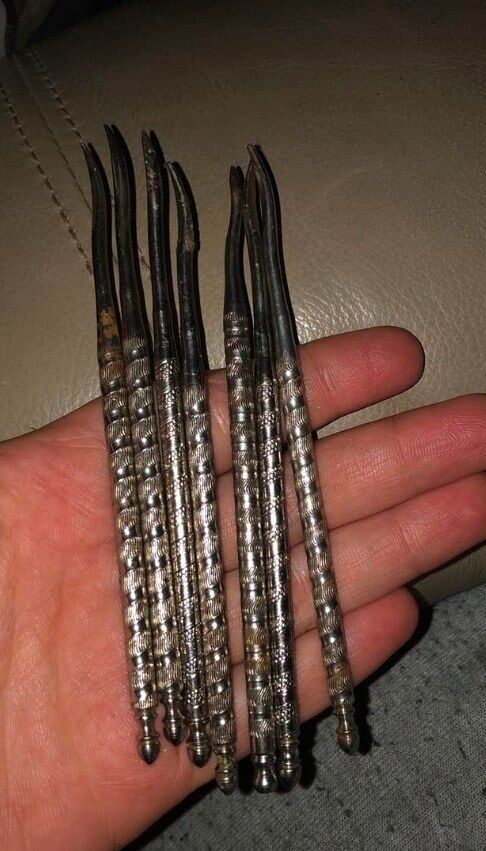
Among boxes of old tools, gardening supplies, and household items, he discovered several unusual devices unlike anything he had seen before. Each one featured a long wooden handle attached to a round wire basket made of flexible metal rods.
At first glance, the objects looked puzzling.
They didn’t resemble common gardening equipment, kitchen tools, or anything typically found in a modern home. Family members examined them closely, but nobody could confidently identify their purpose.
Curiosity quickly took over.
What were these strange devices? Why had his grandparents kept several of them? And why did they appear well-used despite being unfamiliar to everyone in the family?
After a bit of research, the mystery was finally solved.
The forgotten objects turned out to be vintage nut pickers—simple but ingenious tools that once played an important role in many households, farms, and rural communities.
A Window Into Everyday Life From the Past
One reason old tools are so fascinating is that they offer a glimpse into how people lived decades ago.
Many everyday tasks that modern families rarely think about were once regular parts of life. Before convenience foods, large supermarkets, and modern machinery became widespread, families often relied more heavily on their own labor and resources.
People commonly:
- Grew fruits and vegetables at home
- Preserved seasonal foods
- Gathered nuts and berries
- Maintained gardens and orchards
- Repaired tools instead of replacing them
Because of this lifestyle, households frequently owned specialized tools designed for very specific jobs.
The vintage nut picker was one of those practical inventions.
What Is a Nut Picker?
A nut picker is a handheld tool designed to collect fallen nuts from the ground without requiring the user to bend over repeatedly.
The design is surprisingly simple.
Most models feature:
- A long handle
- A rolling wire basket or cage
- Flexible metal spokes
- Lightweight construction
To use the tool, a person simply rolls the wire basket across the ground where nuts have fallen.
As the basket rolls over nuts, the flexible wires spread apart just enough to allow the nuts to enter. Once inside, the wires return to their original position, trapping the nuts safely in the basket.
When the basket is full, the collected nuts can be removed and stored for later use.
The process is efficient, easy, and remarkably clever.
Why These Tools Became So Popular
Before modern harvesting equipment became common, gathering nuts could be a labor-intensive task.
Anyone who has ever picked up walnuts, pecans, or chestnuts by hand knows how quickly the work becomes tiring.
Harvesting often required hours of bending, stooping, and carrying heavy buckets.
The nut picker helped solve this problem.
Instead of constantly reaching down to collect individual nuts, users could remain standing while rolling the tool across the ground.
This provided several benefits:
- Reduced physical strain
- Faster collection
- Improved efficiency
- Greater comfort for older adults
For many families, especially those living in rural areas, the tool became an essential part of seasonal harvest routines.
A Reflection of Mid-Century Innovation
The popularity of nut pickers grew significantly during the mid-1900s.
At the time, practical household inventions were highly valued. Manufacturers focused on creating durable products that simplified everyday tasks while lasting for many years.
Unlike many modern items designed for short-term use, these tools were often built with longevity in mind.
Common features included:
- Solid wood handles
- Strong metal construction
- Simple mechanical designs
- Repairable components
Because of their durable construction, many vintage nut pickers remain functional decades after they were first manufactured.
Why Younger Generations Often Don’t Recognize Them
Today, many people have never seen a nut picker before.
Modern lifestyles have changed dramatically compared to those of previous generations.
Most consumers purchase nuts already cleaned, packaged, and ready to eat. Few people regularly gather nuts from trees in their yards or participate in seasonal harvesting.
As farming practices became more mechanized and suburban living became more common, specialized hand tools gradually disappeared from everyday use.
As a result, many younger people encounter these devices without any idea of their original purpose.
What was once a common household tool now feels like a historical curiosity.
More Than Just a Tool
For my friend, identifying the objects was only part of the experience.
What made the discovery meaningful was realizing how closely the tools were connected to his grandparents’ lives.
The worn wooden handles showed years of use.
The metal baskets carried scratches from countless harvest seasons.
These weren’t just forgotten gadgets.
They were physical reminders of routines, traditions, and work that had been part of his family’s history.
Suddenly, what looked like an old piece of metal became something far more valuable.
It became a connection to the past.
The Beauty of Simple Engineering
One of the most impressive things about vintage nut pickers is how effectively they solve a problem using a straightforward design.
There are no motors.
No batteries.
No complicated moving parts.
Instead, the tool relies on flexible tension and basic mechanics.
As the basket rolls, the wires naturally open and close, capturing nuts with minimal effort from the user.
It is a perfect example of practical engineering—simple, reliable, and effective.
Many people are surprised to learn that designs created decades ago often remain just as useful today as when they were first introduced.
The Growing Interest in Vintage Tools
In recent years, antique tools have become increasingly popular among collectors and history enthusiasts.
People enjoy learning about objects that reveal how previous generations lived and worked.
Vintage tools often provide insight into:
- Rural traditions
- Agricultural history
- Household routines
- Practical craftsmanship
- Everyday problem-solving
Nut pickers are especially appealing because they remain functional.
Unlike some antique items that serve only decorative purposes, many vintage nut pickers can still be used exactly as intended.
Gardeners, orchard owners, and hobby farmers continue to appreciate their effectiveness.
Preserving Family History Through Everyday Objects
Sometimes the most meaningful family heirlooms aren’t expensive or rare.
They are the ordinary objects that quietly supported everyday life.
A tool used during harvest season.
A kitchen gadget passed down through generations.
A piece of equipment that reflects years of work and tradition.
These items tell stories that photographs alone cannot capture.
They remind us how people lived, what they valued, and how they solved challenges using creativity and resourcefulness.
Final Thoughts
What began as a mystery in my friend’s garage turned into a fascinating lesson in history, craftsmanship, and family heritage.
The strange wire devices that nobody recognized were actually vintage nut pickers—simple tools that once made seasonal harvesting easier for countless families.
Today, these forgotten inventions serve as reminders of a different era, one where durability, practicality, and self-sufficiency played a larger role in everyday life.
And perhaps that’s what makes discoveries like this so enjoyable.
Sometimes an old tool isn’t just an old tool.
Sometimes it’s a small piece of history waiting to tell its story.