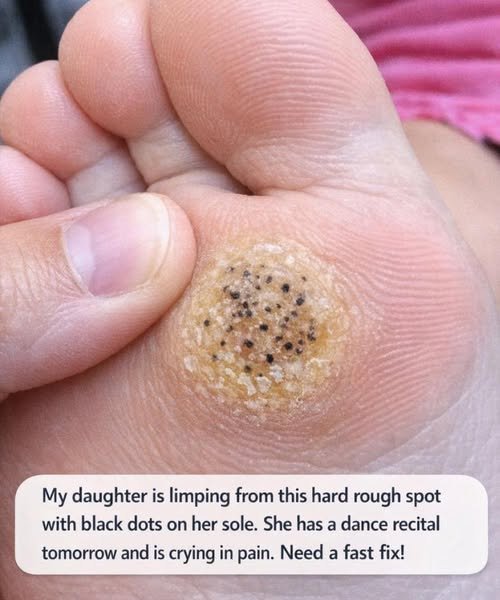
The night before my daughter’s big dance recital, everything seemed ready. Her costume was hanging neatly by the closet door, her shoes were packed, and she had spent weeks practicing every routine. Then, just as we were getting ready for bed, she started limping.
At first, I assumed she had simply overworked her feet during rehearsal. Dancers often deal with soreness, and I expected a little rest would solve the problem. But when I looked closer, I noticed a small rough patch on the bottom of her foot. It looked hardened and slightly raised, and there were tiny dark spots visible in the center.
Naturally, I became concerned.
Like many parents, my first thought wasn’t about the cause—it was whether she would be able to perform the next day. She had been looking forward to this recital for months, and the idea of missing it was heartbreaking.
After examining the area more carefully, I realized that several common foot conditions can appear similar. Some spots may be caused by repeated pressure, friction from shoes, minor skin injuries, or other everyday issues. Whatever the reason, one thing was clear: the area was causing her discomfort whenever she walked.
The good news is that many foot irritations can be managed temporarily with simple comfort measures until a healthcare professional can evaluate them if necessary.
The first thing we did was soak her foot in warm water for about fifteen minutes. The warmth seemed to help relax the surrounding skin and gave her a little relief. After gently drying her foot, we avoided rubbing or scraping the area, since that could increase irritation.
Next, we focused on reducing pressure.
Because the spot was located on a weight-bearing part of her foot, every step placed direct stress on the sensitive area. To help with this, we used a soft cushioning pad designed to protect sore spots on the feet. The padding helped redistribute pressure and made walking noticeably more comfortable.
We also checked her dance shoes.
Even a shoe that normally fits perfectly can become uncomfortable when a foot develops a sensitive area. We made sure there was enough room inside the shoe and added a small layer of cushioning for extra support. These minor adjustments can sometimes make a significant difference when comfort is the priority.
While searching for solutions, I learned that many foot problems become more painful simply because people continue placing pressure directly on them. Providing protection and support often helps reduce discomfort, even if it doesn’t immediately solve the underlying issue.
Of course, every parent wonders whether a painful foot problem could be something more serious.
Certain signs should never be ignored. Significant swelling, redness, unusual warmth, drainage, or severe pain may warrant prompt medical attention. Likewise, if a child cannot bear weight on the foot or develops worsening symptoms, it is wise to contact a healthcare professional for guidance.
Fortunately, my daughter’s situation did not seem to involve those warning signs.
Instead, our goal became helping her stay comfortable while monitoring the area carefully.
Another lesson I learned is that quick fixes are not always the best answer. When parents feel pressure to solve a problem immediately, it can be tempting to try aggressive home remedies. However, picking, cutting, scraping, or attempting to remove skin growths without proper guidance can lead to additional irritation and increase the risk of complications.
Patience is often the safer choice.
As recital day approached, we focused just as much on her emotions as on her foot.
She worried that she might let down her dance group or disappoint her instructors. I reminded her that her health mattered far more than any performance. Whether she danced perfectly, danced cautiously, or chose not to participate at all, her well-being would always come first.
That reassurance seemed to help.
Children often carry enormous expectations on their shoulders, especially when they care deeply about an activity. Sometimes they simply need permission to prioritize themselves.
The next morning, after another gentle soak and fresh padding, she tested her foot carefully. To our relief, she felt significantly better. The discomfort hadn’t completely disappeared, but it was manageable.
At the recital venue, we continued paying attention to how she felt. She warmed up gradually rather than jumping straight into intense movement. She also took breaks whenever she needed them.
Most importantly, she listened to her body.
By performance time, her confidence had returned.
Watching her step onto the stage reminded me of an important truth: unexpected challenges can appear at the worst possible moments, but staying calm often leads to better decisions. Instead of panicking, we focused on practical steps that improved comfort and reduced stress.
The recital itself went beautifully.
Later that evening, after the excitement had settled, we made plans to continue monitoring the spot and seek professional evaluation if it didn’t improve. Addressing foot concerns early can help prevent them from becoming larger problems later.
Looking back, the experience taught me something valuable. As parents, we can’t prevent every unexpected issue. There will always be last-minute surprises, whether it’s a sore foot, a forgotten costume piece, or a sudden case of nerves before a big event.
What we can do is respond with patience, support, and a clear focus on our children’s needs.
Sometimes the most important thing isn’t finding an instant solution. It’s helping a child feel cared for, reassured, and confident enough to face a challenge one step at a time.
And in our case, those small steps were enough to get her through a memorable night she had worked so hard to enjoy.