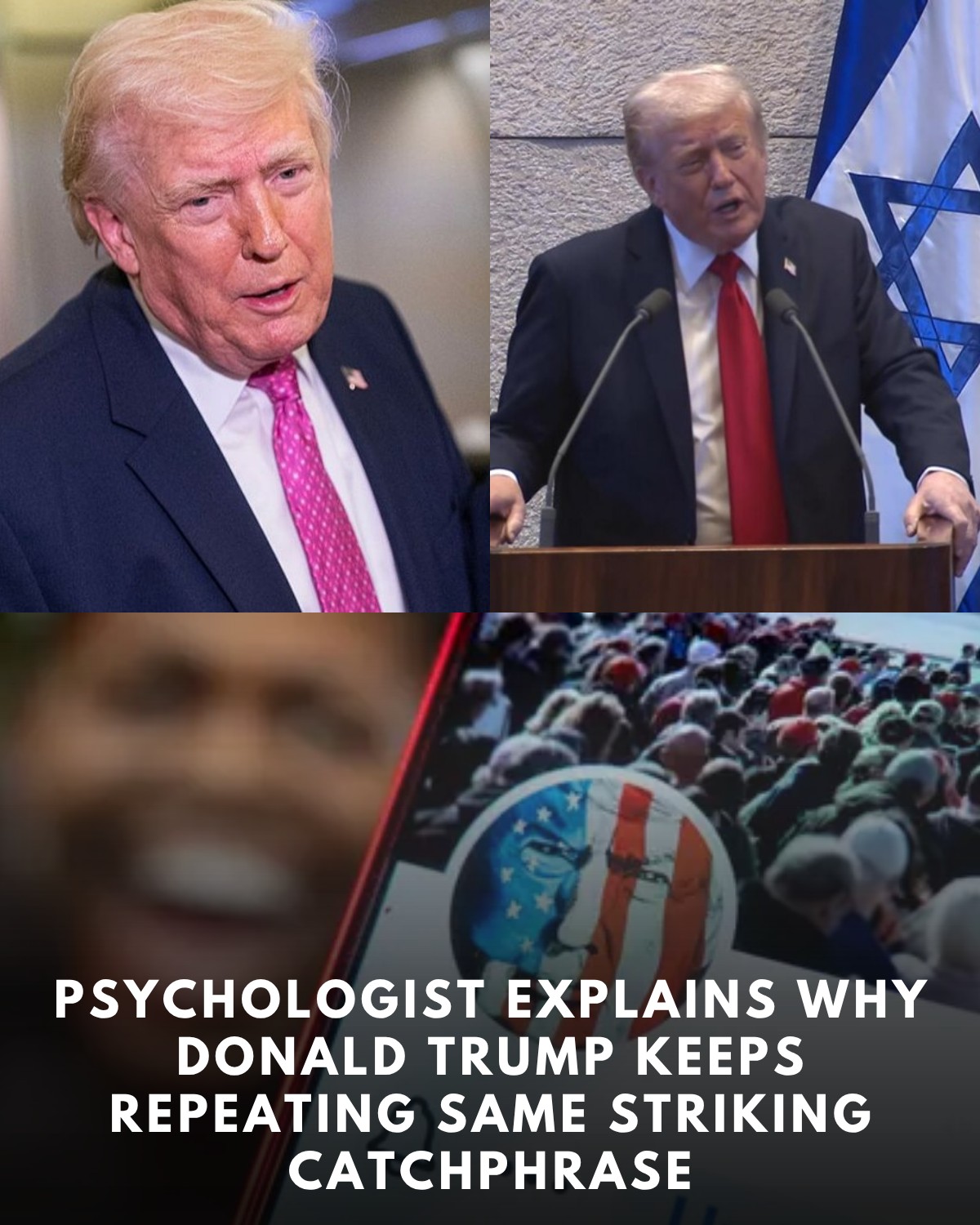
President Donald Trump’s habit of ending his Truth Social posts with the line “Thank you for your attention to this matter” has become one of the more distinctive features of his second-term public messaging, moving from an occasional sign-off into a repeated phrase attached to announcements, threats, grievances and policy declarations. By December 2025, The Washington Post counted at least 190 such uses, and by January 2026 the Associated Press reported that the tally had risen to 242 during his second term, underlining how frequently the phrase had become part of his online voice. (The Washington Post)
The phrase has appeared in posts on matters ranging from foreign policy to corporate attacks and culture-war interventions. In one Truth Social post carried in early April 2026, Trump wrote that talks with Iran were “going very well” and signed off: “Thank you for your attention to this matter! President DONALD J. TRUMP.” In another post from March 2026, he described Iran as “THE LOSER OF THE MIDDLE EAST” and again used the same closing line. The wording has also appeared in non-diplomatic disputes. When Trump called for Intel chief executive Lip-Bu Tan to quit in August 2025, he wrote that the CEO “must resign, immediately” and ended with a variation, saying: “Thank you for your attention to this problem!” (Truth Social)
That repeated use has drawn attention not only because of its frequency, but because of the contrast between the formal, old-fashioned phrasing and the often combative substance of the posts it concludes. Trump’s messages are frequently written in emphatic capital letters, packed with superlatives, insults or threats, and then closed with a line more commonly associated with office correspondence or a stern business letter. The effect is unusual enough that it has become a subject of discussion among commentators, political opponents and some of Trump’s own allies. The Washington Post described it as a hallmark of his communication style in 2025, while AP noted that it had become a recognisable catchphrase of his second term. (The Washington Post)
A psychotherapist interviewed about the phrase, Shenikka Moore-Clarke, said the line may function as more than simple courtesy. In remarks quoted by LADbible from an interview with HuffPost, Moore-Clarke said the repeated wording “may read as more than formality” and “carries undertones of control and authority.” She said language can become a way to manage image and power, and suggested that the wording gives the impression that Trump’s statement is final and meant to command notice. She also said the phrase can come across as a signal that the subject is something people “need to pay attention to.” (LADbible)
That interpretation broadly matches how Trump’s own team has described the phrase. White House communications director Steven Cheung told The Washington Post, as quoted by LADbible and other reports, that Trump writes his own posts and uses the sign-off because it is “final and forceful.” Cheung added: “He communicates directly and decisively, and there is no ambiguation.” Whether taken as a deliberate branding device or simply a preferred turn of phrase, the message from the White House was that the line is intentional and meant to underline certainty rather than politeness. (LADbible)
The phrase also appears to fit a long-running pattern in Trump’s political communication. For years he has relied on repetition, slogan-like wording and catchphrases that can be easily recognised, repeated and remixed by supporters and critics alike. During his years in business and television he became associated with short, memorable lines. In politics he has often reduced complex disputes into highly stylised language built for instant recognition. This sign-off, though less dramatic than some of his past slogans, works in a similar way. It turns even a routine post into something with a familiar cadence, and it gives his statements a closing stamp that readers now immediately associate with him. That appears to be part of why the phrase has spread beyond his own account and into the wider political culture. (The Washington Post)
Trump’s opponents have been quick to use the line against him. California Governor Gavin Newsom posted the phrase on Instagram in August 2025 in a mocking context, using Trump’s own wording as a form of political parody. The phrase has also been widely discussed on social media, where users have treated it as both a meme and a symbol of Trump’s increasingly stylised posting habits. That crossover from presidential sign-off to internet joke is part of what has kept the wording in the spotlight. Once a phrase becomes recognisable enough to be reused by rivals, it stops being just a rhetorical quirk and becomes part of the broader political conversation. (Instagram)
There is also evidence that the phrase has become a piece of merchandise. The MAGA store has sold hats carrying the slogan “Thank You For Your Attention To This Matter,” listed at $39.99, showing how quickly the wording moved from Trump’s posts into campaign-style branding and retail culture. That development is consistent with Trump’s long-standing tendency to blur the lines between politics, celebrity, media performance and merchandising. A line that begins as a postscript to presidential messages can, in Trump’s political ecosystem, become a product in its own right. (MAGA.com)
The content of the posts themselves helps explain why the phrase has stood out so sharply. Trump has attached it to statements about Venezuela, Iran, tariffs, media grievances, executive demands and personal attacks. The effect is to give radically different subjects the same closing note, whether he is discussing military matters, mocking a public figure or weighing in on a corporate leadership dispute. That consistency may be one reason observers see the phrase as performative. It does not seem tailored to one type of message. Instead, it acts as a universal ending, turning nearly every post into a proclamation with a sense of finality. (Truth Social)
For Trump, whose political identity has long depended on dominating attention, the line may be useful precisely because it sounds official while still feeding the pace and volume of social media. It is old-fashioned enough to suggest authority, but short enough to function in a digital feed. It can sound like an instruction, a dismissal or a stamp of closure. That ambiguity may help explain why it has lasted. Critics read it as passive-aggressive or controlling. Supporters can read it as decisive. Trump’s own communications chief frames it as forceful. The psychotherapist quoted in reports sees it as a language choice tied to power. (LADbible)
Whatever the exact motive, the sign-off is no longer a minor curiosity. It has become part of the texture of Trump’s presidency and part of the way he projects himself online: formal and theatrical, direct and repetitive, personal and presidential at the same time. In an administration defined in part by the constant struggle for public attention, a closing line thanking the audience for paying that attention has turned into its own political message.