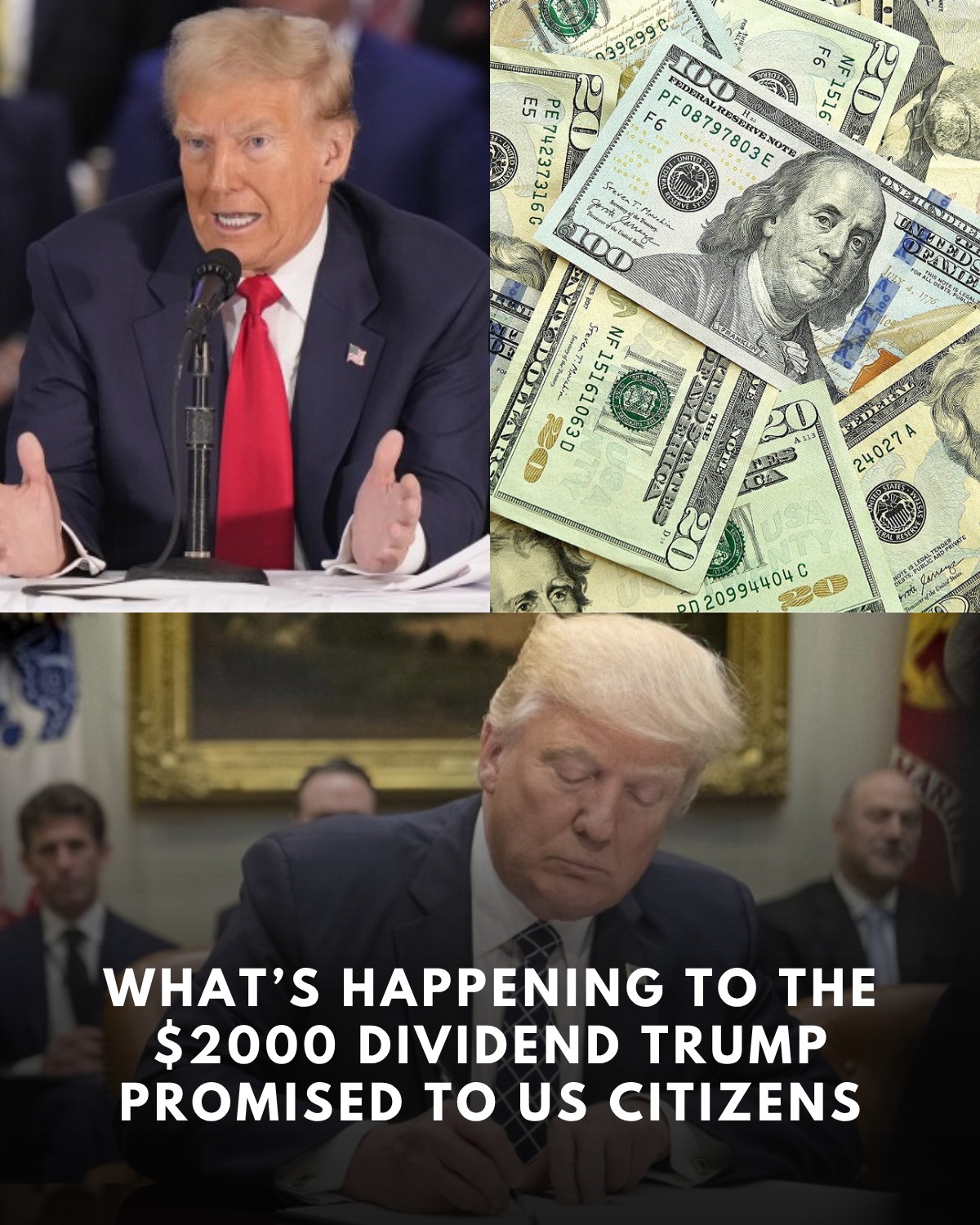
Donald Trump’s proposal to deliver $2,000 payments to Americans, described as a “tariff dividend”, has drawn widespread public attention in early 2026, but no such payments have been approved or scheduled, and federal officials say there is currently no programme in place to distribute them.
The idea was first outlined in late 2025, when Trump said revenue generated from sweeping tariffs on imported goods could be returned directly to U.S. citizens. In a post on his Truth Social platform, he wrote that Americans could receive “a dividend of at least $2000 a person (not including high income people!)”, framing the plan as a way of sharing the proceeds of his trade policies with the public.
He has since repeated the proposal in public remarks, suggesting that the United States was generating substantial income from tariffs and that this could fund payments to households. Speaking to reporters in early 2026, Trump said there was “so much money coming in from tariffs” that it would allow for “a very substantial dividend to the people of our country.”
Despite those statements, the proposal remains at an early and informal stage. No legislation has been passed to authorise such payments, and no federal agency has announced a timetable or mechanism for distributing them. The Internal Revenue Service has confirmed that there is no $2,000 stimulus or rebate payment currently planned for 2026.
The absence of any formal programme has not prevented confusion from spreading. Messages circulating online and via text have claimed that the payments are already available or require immediate action to claim them. Authorities have warned that these messages are fraudulent and emphasised that legitimate government payments are never distributed through unsolicited links or third-party websites.
At the centre of the proposal is Trump’s wider tariff policy. Since returning to office, his administration has imposed a broad range of tariffs on imported goods, arguing that they would protect domestic industries and generate revenue. Tariffs are paid by companies importing goods into the United States, although economists widely say the costs are often passed on to consumers through higher prices.
The administration has pointed to the revenue generated by these tariffs as a potential funding source for the dividend. However, analysts say there is a significant gap between the amount raised and the cost of the proposed payments. Providing $2,000 to a large share of the U.S. population would require hundreds of billions of dollars, depending on how eligibility is defined. Current tariff revenues fall well short of that level.
The proposal also faces legal and constitutional hurdles. Under U.S. law, federal spending programmes must be approved by Congress, and no bill authorising a tariff-funded dividend has been introduced or passed. Some officials within the administration have acknowledged that congressional approval would likely be required, although Trump has at times suggested he may be able to act without it.
There is also uncertainty about what form any “dividend” might take. While Trump has described direct payments, other officials have indicated that any benefit could instead be delivered through tax reductions or credits, rather than cash cheques. No detailed plan has been released outlining eligibility criteria, payment methods or timing.
Adding further complexity is the legal status of the tariffs themselves. Many of the measures were introduced using emergency powers, and they have been challenged in court. A recent ruling struck down parts of the tariff regime, raising questions about whether some of the revenue collected could need to be returned. That has prompted separate discussions about potential refunds to businesses or consumers affected by the tariffs, although those ideas are distinct from Trump’s proposed dividend and remain under consideration.
Economists have also raised concerns about the broader impact of the policy. Research suggests that tariffs have increased costs for American households, with estimates indicating that they have added hundreds or even over a thousand dollars per year to consumer expenses. Some analysts warn that distributing large-scale payments funded by tariffs could contribute to inflation, particularly if the payments were not matched by sustainable revenue.
The lack of clarity has fuelled speculation on social media, where users have debated whether payments are imminent or whether the proposal is financially viable. Some have pointed to Trump’s repeated references to the idea as evidence that a programme could be forthcoming, while others have questioned how it could be implemented without congressional approval or sufficient funding.
For now, federal agencies have maintained that no new stimulus payments are scheduled. The IRS has said that any legitimate payments would be announced through official government channels and distributed using established systems, typically linked to tax filings. At present, the only payments Americans can expect are routine tax refunds and existing credits such as the Earned Income Tax Credit or Child Tax Credit.
Trump has continued to promote the tariff dividend as part of his economic agenda, presenting it as a direct benefit to American households, particularly those on middle and lower incomes. However, key details remain unresolved, including who would qualify, how much they would receive, and when any payments might be made.
The future of the proposal depends on several factors, including whether Congress chooses to authorise such a programme, whether sufficient funding can be identified, and how ongoing legal challenges to the tariff system are resolved. Until those issues are addressed, the $2,000 payments remain a proposal rather than an active policy, with no confirmed timeline and no mechanism in place to deliver them.