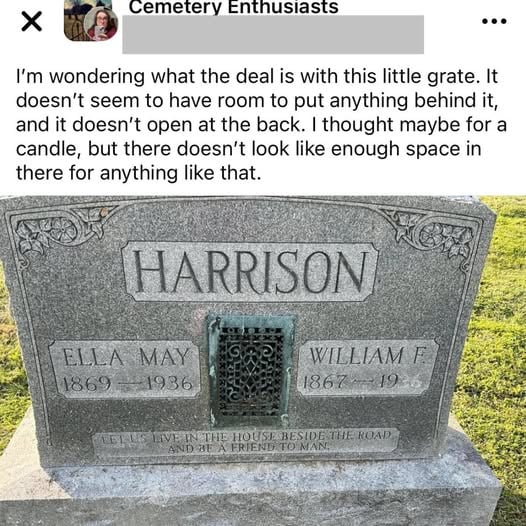
Set into the marker like a secret, the cast-iron grate turns the grave into a threshold rather than an ending. It echoes the old houses of a century ago, where heat rose through patterned vents and families gathered above them, talking, working, laughing. Here, that same humble object becomes a quiet vow: that the comforts of home, once fiercely loved, will not be surrendered even to death.
Paired with Sam Walter Foss’s “The House by the Side of the Road,” the symbolism deepens. The poem’s gentle vision of a life spent welcoming others mirrors the grate’s purpose—spreading warmth, opening passage, inviting rest. This person is remembered not by grand statues, but by the suggestion of an open door, a standing invitation. In iron and verse, the stone whispers that true home is not a place we leave behind, but a warmth that keeps traveling through those who remember.